
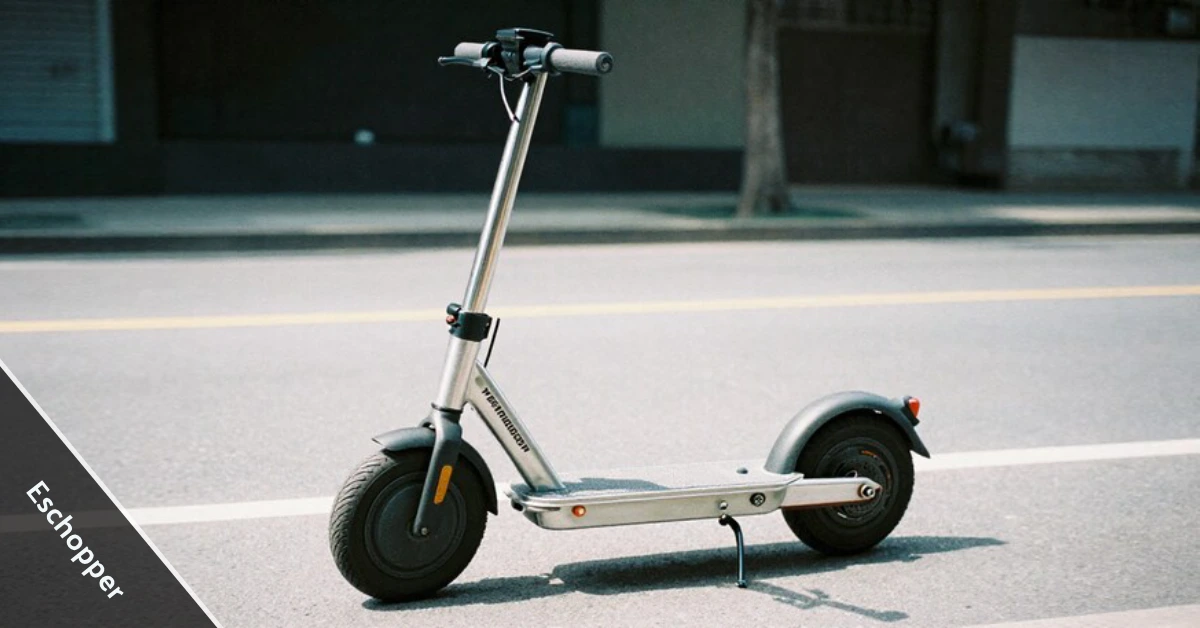
An eschopper is an electric chopper-style scooter combining retro motorcycle design with battery-powered mobility. These vehicles typically reach 25-45 km/h, travel 40-70 km per charge, and cost $1,200-$4,000. They serve urban commuters seeking style and sustainability.
What Makes an Eschopper Different
An eschopper looks like a miniature chopper motorcycle but runs on electricity instead of gasoline. The name combines “electric” with “chopper,” referring to the custom motorcycle style that became popular in the 1960s and 70s.
You’ll recognize an eschopper by its distinctive features. Extended handlebars sit wide apart, creating an upright riding position. Fat tires (typically 3-4 inches wide) provide stability and handle bumps better than thin scooter wheels. The seating position is low and relaxed, not hunched forward like a standard scooter.
The frame design often shows off the battery pack and motor, similar to how vintage choppers displayed their engines. Many models include digital dashboards showing speed, battery level, and trip distance.
Unlike regular electric scooters that emphasize portability and folding mechanisms, eschoppers prioritize comfort and style. They’re heavier (typically 60-90 pounds) and designed to stay assembled. You won’t fold one up to carry on a train.
The riding experience differs, too. Eschoppers feel more planted and stable than standing scooters. The seated position and wider wheelbase make them comfortable for longer rides, though they sacrifice the quick maneuverability that makes kick scooters popular for crowded sidewalks.
How Eschoppers Work
The core of any eschopper is its battery pack. Most use lithium-ion cells with capacities between 20Ah and 40Ah. Higher numbers mean longer range, but add weight and cost.
A typical 30Ah battery at 48V provides about 1,440 watt-hours of energy. In practical terms, that’s enough to travel 50-60 km under normal conditions. Your actual range depends on rider weight, terrain, speed, and temperature.
The motor sits in the rear wheel hub or connects to the rear wheel via a belt or chain. Power ratings range from 500W for entry-level models to 2000W or more for performance versions. A 1000W motor provides adequate power for most urban riding, including moderate hills.
Your right thumb controls the throttle. Twist it, and the electronic controller sends power from the battery to the motor. There’s no clutch, no gears to shift. Speed control is entirely in that throttle twist.
Charging uses a standard wall outlet. Plug in the included charger, wait 4-6 hours, and you’re ready to ride. Some models offer fast-charging options that cut this time in half.
Regenerative braking systems on some eschoppers capture energy during braking and feed it back to the battery. This extends the range by 5-10% and reduces brake wear, though the effect is modest compared to electric cars.
Eschopper vs E-Bike vs Electric Moped
Understanding how eschoppers compare to similar vehicles helps you choose the right option.
| Feature | Eschopper | E-Bike | Electric Moped |
|---|---|---|---|
| Top Speed | 25-45 km/h | 25-32 km/h | 30-50 km/h |
| Range | 40-70 km | 30-80 km | 50-100 km |
| Weight | 60-90 lbs | 40-70 lbs | 100-150 lbs |
| License Needed | Varies by state | Usually none | Often required |
| Price Range | $1,200-$4,000 | $800-$3,500 | $2,000-$6,000 |
| Pedaling Option | No | Yes | No |
| Best For | Style + short trips | Exercise + commute | Longer commutes |
E-bikes win for range and exercise potential. You can pedal when the battery runs low or when you want a workout. They’re also legal in more places without special permits.
Electric mopeds offer the longest range and highest speeds. They’re better for commutes over 20 km. But they require motorcycle licenses in many states and cost more to insure.
Eschoppers occupy the middle ground. They’re more comfortable than standing scooters, more stylish than most e-bikes, and simpler than mopeds. You trade some practicality for aesthetic appeal.
Real Costs Beyond Purchase Price
The sticker price is just the start. Here’s what eschopper ownership actually costs.
Budget models start around $1,200-$1,800. These typically have 500W motors, smaller batteries (20-25Ah), and basic features. They work fine for short trips under 20 km per day.
Mid-range models ($2,000-$3,000) offer 1000-1500W motors, larger batteries (30-35Ah), better suspension, and improved build quality. This range provides the best value for regular commuters.
Premium eschoppers ($3,500-$4,500) feature 2000W+ motors, 40Ah+ batteries, hydraulic brakes, and advanced displays. You’re paying for performance and durability.
Charging costs are minimal. At $0.13 per kWh (US average), charging a 1,440Wh battery costs about $0.19. If you ride 50 km per charge and charge three times weekly, that’s $30 per year in electricity.
Maintenance costs stay low compared to gas vehicles. You’ll spend $50-100 annually on basics like tire replacements and brake pad changes. Battery replacement is the big expense, costing $400-$800 every 3-5 years, depending on quality and usage.
Insurance isn’t always required, but it costs $100-$300 annually when you carry it. Some homeowners’ or renters’ policies cover electric scooters, so check before buying separate coverage.
Registration fees vary wildly by state. Some treat eschoppers like bicycles (no fee), others like mopeds ($50-$150 annually), and some haven’t established clear rules yet.
Over two years, a mid-range eschopper costs roughly $2,500 (purchase) + $60 (charging) + $200 (maintenance) + $400 (insurance) = $3,160 total. That’s about $130 per month. Compare that to car payments, gas, insurance, and parking, and the savings become clear.
Legal Requirements by State
This is where things get complicated. Electric scooter laws vary significantly across states, and eschoppers occupy a gray area between different vehicle categories.
The 20 mph (32 km/h) threshold matters most. If your eschopper exceeds this speed, 16 states classify it as a moped, triggering license and registration requirements. Stay under 20 mph, and you’re usually treated like a bicycle.
Motor power also counts. Many states set a 750W limit for bicycle classification. Above that, you need registration even if your top speed stays under 20 mph.
Helmet laws differ by location. Twelve states plus Washington, D.C. require helmets for riders under 18. Some cities impose stricter rules requiring helmets for all riders regardless of state law.
Bike lane access generally applies to eschoppers that qualify as bicycles. But some municipalities specifically ban motorized vehicles from bike lanes, forcing you onto regular roads.
Registration and insurance requirements kick in when your eschopper is classified as a moped. You’ll need to display a license plate and carry liability insurance.
To check your local laws, visit your state’s Department of Motor Vehicles website and search for “electric scooter” or “low-speed electric bicycle” regulations. City ordinances may add restrictions, so check your municipal code, too.
When buying, confirm the dealer can provide documentation showing the vehicle’s specifications meet local requirements. You’ll need proof of speed limits and motor power for registration if required.
Who Should Choose an Eschopper
Eschoppers work best for specific situations. Here’s how to know if you’re a good fit.
You’re an ideal candidate if you commute under 15 km each way, mostly on flat terrain or gentle hills. Your route includes bike lanes or roads with speed limits under 50 km/h. You have secure parking at both ends (garage, locked bike room, or monitored parking area). You value appearance and enjoy the cruiser motorcycle aesthetic. You’re environmentally conscious and want zero-emission transportation for short trips.
The style factor matters. People buy eschoppers partly because they look cool. If that doesn’t appeal to you, a more practical e-bike probably makes more sense.
Weather considerations are real. Riding in rain, snow, or extreme cold isn’t pleasant on any two-wheeler, but eschoppers lack the weather protection of enclosed vehicles. Plan for alternative transportation on bad weather days.
You should look elsewhere if your commute exceeds 30 km one-way. The range might work, but you’ll arrive at your destination with minimal battery, leaving no margin for detours or forgetting to charge.
Skip eschoppers if you need highway speeds. They’re not built for 80+ km/h traffic and aren’t legal on most highways.
Avoid them for mountainous terrain with steep grades. The motors strain on long climbs, draining batteries quickly and potentially overheating. A regular motorcycle or car makes more sense.
If you require year-round, all-weather reliability, eschoppers fall short. They’re fair-weather transportation. Budget for alternative options during winter months or rainy seasons.
What to Check Before Buying
Smart buying starts with knowing what matters and what’s marketing fluff.
Battery quality should be your top priority. Look for name-brand cells from Samsung, LG, or Panasonic. Ask about the specific cell type, not just the brand name on the pack. Check the warranty, it should cover at least 1-2 years or 500-1000 charge cycles. Cheaper batteries from unknown manufacturers often fail within 18 months.
Build quality shows in the details. Inspect welds on the frame for consistency and smoothness. Check that bolts and fasteners are properly torqued, not finger-tight. Examine paint quality; cheap paint chips easily. Test the suspension by bouncing on the seat. Quality dampers compress smoothly and return without bouncing.
Safety features aren’t optional. Both wheels need disc brakes (hydraulic preferred, mechanical acceptable). Front and rear LED lights should be bright and visible from 100 feet. The digital display should show speed, battery level, and trip distance at a minimum. Check for turn signals; some models include them, most don’t.
Verify legal compliance before paying. Get written confirmation that the vehicle meets your state’s speed and power limits. Ask for documentation showing specifications. Some dealers will say “it’s street legal” without actually knowing your local laws. Do your own research.
Warranty coverage varies dramatically. Look for at least one year on the frame, motor, and controller. Battery warranties should specify both time (12-24 months) and cycles (500-1000). Labor coverage for repairs saves money if you’re not mechanically inclined.
After-sales support matters when things break. Check if the dealer has a local service center or if you’ll ship the eschopper for repairs. Ask about parts availability; some brands take months to ship replacement components. Read reviews specifically mentioning customer service experiences.
During the test ride, check these five things:
- Acceleration smoothness from a stop (jerky = poor controller tuning)
- Brake feel and stopping distance from 30 km/h (should feel confident, not mushy)
- Steering stability at top speed (wobbles indicate poor geometry)
- Seat comfort over 10+ minutes (padding quality matters on longer rides)
- Noise levels from motor and controller (excessive whining suggests quality issues)
First Month Ownership Tips
The first 30 days set patterns for long-term satisfaction.
Battery break-in is real, though often overstated. For the first 5-10 charges, avoid completely draining the battery. Stop riding when you hit 20-30% remaining. This helps the battery management system calibrate accurately. After the break-in period, occasional deep discharges won’t harm modern lithium-ion packs.
Charge after every ride initially. This habit helps you learn your actual range and prevents getting stranded. Once you know your limits, you can charge less frequently.
Never charge immediately after riding. Let the battery cool for 20-30 minutes first. Hot batteries charge more slowly and degrade faster. Similarly, don’t ride immediately after charging. Let everything reach ambient temperature.
Store your eschopper in a cool, dry location when not in use. Extreme temperatures (below 0°C or above 40°C) reduce battery life. If storing for more than a week, charge to 50-60%, not 100%.
Basic maintenance is simple but essential. Check tire pressure weekly; low pressure reduces range and handling. Inspect brake pads monthly for wear. Clean the frame and components after wet rides to prevent corrosion. Tighten any loose bolts you notice (they’ll vibrate loose during the break-in period).
Safety gear starts with a helmet, even in states that don’t require one. Add gloves for grip and hand protection. Reflective clothing makes you visible to drivers. Consider knee and elbow pads if you’re a new rider or plan to ride in traffic.
Common new owner mistakes include leaving the eschopper unlocked (theft is common), riding in the rain without checking IP ratings (water damage isn’t always covered), ignoring unusual sounds or vibrations (small problems become big ones), overestimating range and getting stranded, and skipping the owner’s manual (it contains model-specific guidance).
After 30 days, you’ll know if your eschopper fits your lifestyle. Most buyers either love the convenience and style or realize they need something with more range. Either way, you’ve given it a fair assessment.
