

Cesta Roman: Complete Guide to San Marino’s Second Tower
Cesta Roman, also known as the Second Tower or Torre della Fratta, stands at 750 meters on Monte Titano’s highest peak in San Marino. Built during the 13th century atop ancient Roman fortress...

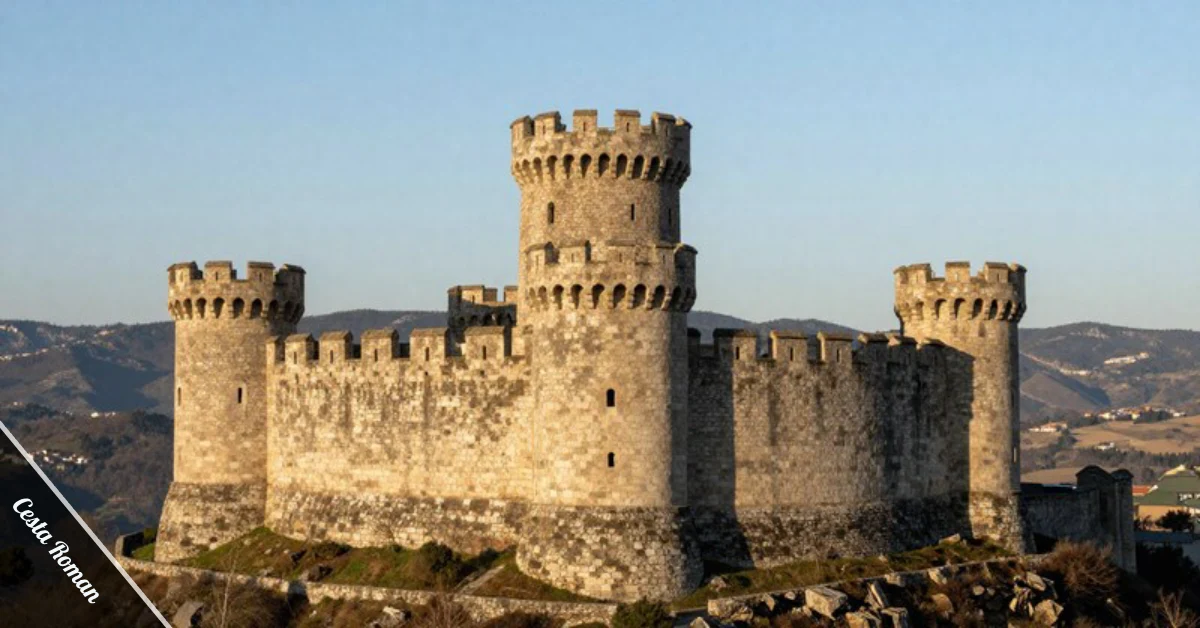
Cesta Roman, also known as the Second Tower or Torre della Fratta, stands at 750 meters on Monte Titano’s highest peak in San Marino. Built during the 13th century atop ancient Roman fortress ruins, it now houses the Museum of Ancient Weapons with over 700 artifacts spanning five centuries of European military history.
Table Of Content
The tower forms part of San Marino’s iconic Three Towers defensive system and gained UNESCO World Heritage status in 2008. Visitors can explore its pentagonal medieval architecture, walk the Witches Path connecting all three fortresses, and experience panoramic views stretching across the Romagna plains to the Adriatic Sea on clear days.
What Is Cesta Roman
Cesta Roman refers to the second of three medieval towers perched on Monte Titano in the Republic of San Marino. The name derives from “cesta,” meaning lookout or watchtower in the local dialect, and “Roman” references the ancient fortress foundations beneath the medieval structure.
The tower sits at the summit’s highest point, making it the most elevated defensive structure in the Three Towers system. Unlike its companion Guaita, which served primarily as a military garrison, Cesta functioned as both a strategic observation post and a prison. Guards stationed here could monitor approaching threats across the Romagna plains and signal warnings to the capital below.
Visitors reach Cesta via the Passo delle Streghe (Witches Path), a scenic walkway connecting all three towers. The route takes roughly 15 minutes from Guaita and offers panoramic views stretching to the Adriatic coast on clear days. The path climbs steadily but remains accessible to most fitness levels.
Historical Origins and Roman Foundations
Archaeological evidence confirms Roman military presence on Monte Titano before the tower’s construction. Roman engineers recognized the strategic value of this limestone peak, establishing defensive positions that commanded views across multiple valleys. These early fortifications provided the foundation for medieval builders who came centuries later.
The first documented reference to Cesta appears in a 1253 historical record, though construction likely began earlier in the century. The House of Malatesta, powerful feudal lords controlling nearby Rimini, posed constant threats to San Marino’s independence. Local leaders expanded fortifications to counter these dangers, transforming the mountain into a fortress complex.
By the 16th century, engineers added defensive walls connecting Cesta to the broader fortification network. The tower remained an active military installation until the 17th century, when advances in warfare technology rendered static defenses obsolete. Artillery could now breach stone walls from safe distances, making medieval towers impractical for defense.
The structure fell into disrepair for over two centuries. A comprehensive restoration program between 1924 and 1925 returned it to structural integrity. Engineers preserved original medieval construction techniques while reinforcing areas where weathering had caused damage. This restoration work ensures visitors today see the tower much as medieval guards experienced it.
Architecture and Strategic Position
The tower rises from a rectangular base measuring approximately 20 by 30 meters. Builders used local limestone quarried from Monte Titano, giving the structure its characteristic grey-white appearance that blends naturally with the mountain. Walls reach nearly two meters thick at ground level, tapering slightly toward the top to reduce weight while maintaining defensive strength.
Cesta employs a pentagonal layout, an architectural choice providing superior defensive angles compared to circular or square designs. This geometry eliminated blind spots where attackers could shelter from defenders’ weapons. Each wall section covered approaches the others couldn’t reach.
The main entrance sits several meters above ground level, accessible only by wooden ladders that guards could retract during attacks. This elevation forced potential invaders to expose themselves to arrow fire while attempting entry. Interior spaces include a central guardroom where soldiers maintained watch rotations, storage chambers for provisions during sieges, and prison cells carved directly into the bedrock beneath the tower.
Museum of Ancient Weapons
In 1956, San Marino converted Cesta into the Museum of Ancient Weapons, officially known as the Museo delle Armi Antiche. The collection spans 700 artifacts dating from the 13th to 19th centuries, making it one of Europe’s most comprehensive displays of pre-industrial weaponry.
Four exhibition rooms occupy the tower’s interior levels. The first room displays pole arms, including halberds used by Swiss mercenaries, pikes that formed the backbone of Renaissance infantry formations, and partisan spears favored by Italian city-states. Each weapon shows the evolution of battlefield tactics as armor improved and formations changed.
The second room showcases ranged weapons spanning three centuries of development. Crossbows from the 14th century demonstrate the mechanical advantage that allowed untrained soldiers to achieve lethal accuracy. Early firearms like arquebuses and wheel-lock pistols reveal the gradual transition from muscle-powered to gunpowder-based warfare. The collection includes rare examples of combination weapons merging blade and firearm in a single design.
Room three contains edged weapons: swords ranging from medieval longswords to Renaissance rapiers, military daggers, war axes, and maces designed to crush armor rather than cut it. Detailed plaques explain each weapon’s tactical application, manufacturing techniques, and historical context. Many pieces show battle damage and field repairs, providing authentic glimpses into their actual military use.
The fourth room presents armor pieces, including helmets from various European regions, breastplates showing evolution from full plate to lighter designs, and chainmail segments demonstrating construction methods. The museum emphasizes practical military equipment rather than ceremonial pieces, distinguishing it from collections focused on decorative arms.
The Three Towers System
Cesta forms the central element in San Marino’s defensive triad, working in coordination with its companion structures to create overlapping fields of observation and defense. The First Tower, Guaita, dates to the 11th century and served as the primary garrison, housing the largest contingent of soldiers. Its lower elevation made it the first line of defense against approaches from the north and west.
The Third Tower, Montale, constructed in the 14th century, guarded the southern approach but remains closed to public access due to structural concerns. Its smaller size reflected its role as an observation outpost rather than a major defensive position.
These towers appear prominently in San Marino’s national symbolism. The coat of arms depicts all three structures standing against a blue background, representing the republic’s mountain identity. They feature on the reverse side of San Marino’s 50-cent euro coin, making them one of Europe’s most recognizable fortress images. The towers represent the republic’s centuries-long independence despite being surrounded by larger, more powerful neighbors throughout history.
The Witches’ Path connecting the towers earned its name from medieval superstitions about the windswept ridge. Locals believed supernatural forces inhabited the exposed peaks, a belief that helped deter casual trespassers while defenders encouraged such tales. Modern visitors find the path offers remarkable views rather than supernatural encounters.
UNESCO World Heritage Recognition
In 2008, UNESCO designated “San Marino Historic Centre and Mount Titano” as a World Heritage Site. The designation encompasses 55 hectares, including all three towers, the historic city center, and the surrounding natural landscape.
The UNESCO evaluation praised San Marino’s continuous occupation since its founding by Saint Marinus in the 4th century. The towers demonstrate medieval defensive architecture adapted to challenging mountain terrain. Their preservation illustrates the republic’s commitment to maintaining tangible connections to its past while managing modern tourism pressures.
The World Heritage status brought increased international attention and tourism. San Marino invested in improved visitor facilities, interpretive signage in multiple languages, and conservation programs to handle higher foot traffic while protecting the site’s integrity. Annual visitor numbers to the towers increased by approximately 40% following the UNESCO designation.
Planning Your Visit
Cesta opens daily except during extreme weather conditions that make the mountain paths dangerous. Summer hours run from 9:00 AM to 7:00 PM, while winter hours shorten to 9:00 AM to 5:00 PM. The museum closes on December 25, January 1, and a few San Marino national holidays.
Ticket options include:
- Individual tower admission: €4.50
- Pass Ticket covering all accessible towers plus State Museum: €11
- Free entry for children under 12 with accompanying adults
The pass represents better value for visitors planning to explore the complete fortress system. Purchase tickets at the entrance or at the tourist office in Piazza della Libertà. Cash and major credit cards are accepted.
The walk from the historic center to Cesta involves steady uphill climbing on uneven stone paths covering roughly 800 meters. The elevation gain approaches 100 meters. Visitors should wear sturdy walking shoes with good traction and grippy soles. The Witches’ Path can be slippery after rain or when autumn leaves accumulate on the stone surfaces.
Public restrooms are available near the ticket office at Guaita, but not at Cesta itself. Plan accordingly before starting the climb. Water fountains operate during the summer months but shut down in winter to prevent freezing damage.
Best Times and Photography
Early morning visits between 9:00 and 11:00 AM provide the clearest atmospheric conditions for photography and the fewest crowds. Sunrise from Cesta’s viewing platform creates dramatic lighting across the Apennine foothills, though the museum doesn’t open until 9:00 AM for safety reasons.
Late afternoon between 4:00 and 6:00 PM offers warm golden-hour light that enhances the limestone’s natural colors. Photographers favor the western battlements for capturing sunset over the Romagna Riviera. The distant Adriatic often appears as a silver line on the horizon during clear weather.
Weekdays see lighter visitor numbers than weekends, particularly outside the July-August peak season when European tourists fill the site. Spring months (April-May) and autumn (September-October) provide comfortable temperatures ranging from 15-22°C and manageable crowds. Winter visits offer solitude, but prepare for wind and occasional snow on the exposed summit.
The tower occasionally closes for special events, maintenance work, or when high winds make the battlements unsafe. Check San Marino’s official tourism website (visitsanmarino.com) before visiting to confirm operating status and current weather conditions.







No Comment! Be the first one.