
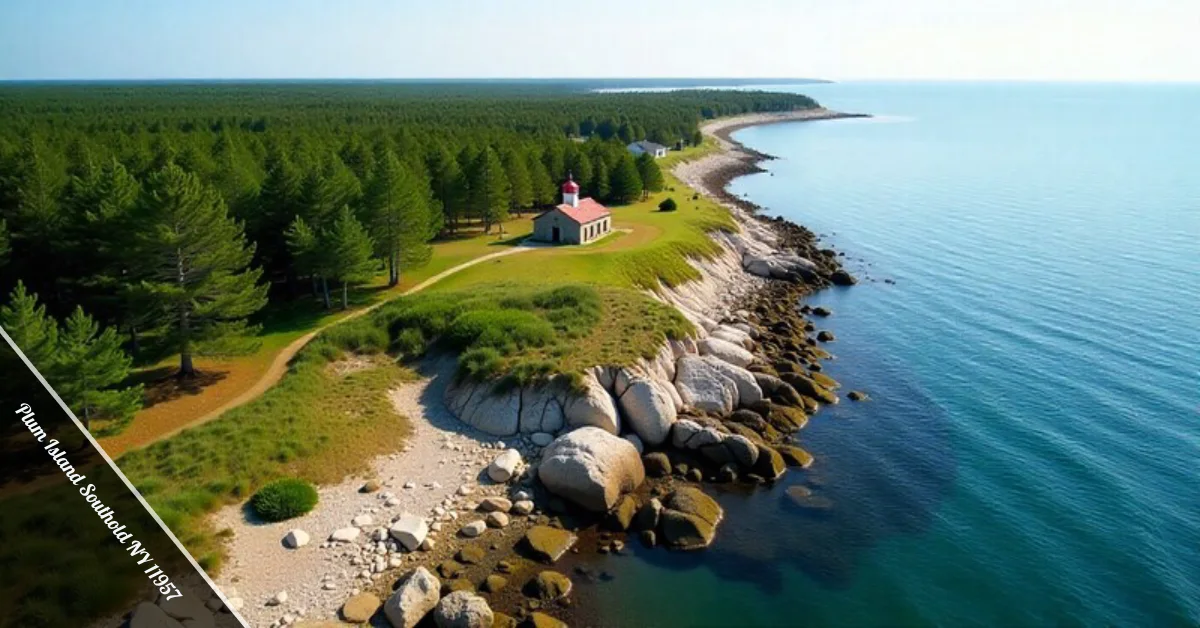
Plum Island Southold NY 11957 is an 840-acre restricted island between Orient Point and Connecticut. Known for its animal disease research facility and rich wildlife, the island is transitioning from active research to potential conservation status after decades of government control.
You can see Plum Island from Orient Point on a clear day, but getting there is another story. This small piece of land has sparked curiosity for years. Some people wonder about the research that happens there. Others want to know if they’ll ever walk its shores.
The island sits at a crossroads right now. After 70 years as a government research site, it’s closing down. What comes next will shape both the island’s future and the surrounding Southold community.
Where Plum Island Sits in Long Island Sound
Plum Island lies 1.5 miles off Orient Point, the easternmost tip of Long Island’s North Fork. The island stretches roughly 3 miles long and 1 mile wide, totaling 840 acres. Water surrounds it, with the Plum Gut channel separating it from the mainland.
The ZIP code 11957 places the island within Southold’s jurisdiction, though no permanent residents live there. Only research staff and security personnel have access to the site during work operations. The island’s isolation has protected it from development that transformed much of Long Island’s coast.
Connecticut’s Fishers Island sits northeast of Plum Island, visible from its rocky shores. This position in Long Island Sound creates strong currents through Plum Gut, making casual boat access difficult even without legal restrictions.
From Military Fort to Research Laboratory
The U.S. Army established Fort Terry on Plum Island in 1897 as part of coastal defense planning. The fort protected the New York harbor approaches during both World Wars. At its peak, Fort Terry housed artillery batteries, barracks, and support facilities for hundreds of soldiers.
The military deactivated Fort Terry in 1949 after determining it was no longer needed for coastal defense. Many original buildings still stand today, preserved by their use in later research operations. The lighthouse, built in 1869, predates the fort and remains a landmark visible from Orient Point.
The Animal Disease Center Era (1954-2026)
In 1954, the U.S. Department of Agriculture opened the Plum Island Animal Disease Center (PIADC) to study foreign animal diseases that threatened American livestock. The facility became one of the few places in the country authorized to work with live samples of foot-and-mouth disease, a highly contagious illness that devastates cattle, pigs, and sheep but doesn’t affect humans.
The Department of Homeland Security took over PIADC operations in 2003. In February 2024, DHS officially received property management authority as the facility prepared for closure. Research operations are scheduled to end in late 2026, later than the 2024 target mentioned in older reports.
The National Bio and Agro-Defense Facility (NBAF) in Manhattan, Kansas, will replace Plum Island’s research mission. This new facility offers modern biosecurity features that the aging island laboratory lacks.
What Actually Happens at the Research Facility
PIADC operates at Biosecurity Level 3 (BSL-3), which means strict protocols control pathogen containment. The research focuses exclusively on animal diseases, not human pathogens. Scientists study diseases like foot-and-mouth disease, African swine fever, and classical swine fever to develop vaccines and diagnostic tools.
This work protects America’s $200 billion livestock industry from devastating outbreaks. A single foot-and-mouth disease outbreak could shut down meat exports and cost billions in economic damage. The research helps veterinarians identify diseases quickly and develop response strategies.
Some myths persist about Plum Island despite decades of documented research. The island did not create Lyme disease (that’s a different tick-borne illness first identified in Connecticut). The facility never worked on biological weapons, though conspiracy theories suggest otherwise. In September 2025, seven workers were hospitalized after potential pathogen exposure, highlighting the real risks researchers face, but the incident involved animal diseases, not human bioweapons.
The facility employed roughly 400 people at its peak, making it a significant employer for the Southold area.
Why Plum Island Matters for Wildlife
Researchers have documented 229 bird species on Plum Island, making it a critical habitat for migratory birds traveling the Atlantic Flyway. The endangered piping plover nests on the island’s beaches each spring. Roseate terns, also threatened, use the island as a stopover during migration.
Salt marshes along the shore filter pollutants and provide nursery habitat for marine species. Tidal flats support shellfish, crabs, and small fish that feed larger predators. These ecosystems remain largely intact because decades of restricted access have prevented development and disturbance.
Native plants like beach plum and scrub oak thrive in the island’s coastal forests. These species struggle in developed parts of Long Island, where construction has destroyed natural habitats. Plum Island offers a window into what the North Fork coastline looked like before extensive human settlement.
Limited human presence lets wildlife behave naturally. Birds’ nest without beach recreation disturbance. Plants spread without landscaping interference. This near-pristine state makes the island valuable for ecological research and conservation.
Who Owns Plum Island and What Happens Next
The federal government has owned Plum Island since 1899. The Department of Homeland Security currently manages the property, with a mandate to transfer or sell it after research operations cease.
In September 2025, DHS began discussions with Suffolk County about potential county stewardship. This represents a shift from earlier sale plans that would have allowed private development. Congress blocked the sale option in 2020 after conservation groups, including the Preserve Plum Island Coalition, argued that development would destroy irreplaceable ecosystems.
Decontamination will take 4 to 6 years after the lab closes in late 2026. This process involves testing soil, removing contaminated materials, and certifying that buildings are safe for reuse. Only after decontamination can ownership transfer or public access begin.
Several future scenarios exist. The National Park Service could acquire the island, creating public access while protecting wildlife. Suffolk County could manage it as a nature preserve with limited tours. A conservation trust might take control, balancing public education with habitat protection.
The Preserve Plum Island Coalition continues advocating for permanent conservation protection. They argue the island’s wildlife value and historical significance justify federal or state preservation status rather than private control.
Can You Visit Plum Island Today?
No public access exists to Plum Island currently. No ferry service runs to the island, and private boats cannot legally land there. Security personnel patrol the shores, and trespassing carries federal penalties.
You can view the island from several spots on Orient Point. Orient Beach State Park offers the closest mainland vantage point, about 1.5 miles across Plum Gut. On clear days, you can see the lighthouse and some buildings through binoculars. The view gives a sense of the island’s size and isolation but little detail.
Special research permits allowed limited access in the past, but the facility isn’t issuing new permits as operations wind down. Some conservation groups conduct occasional legal surveys, but these aren’t open to the public.
Future public access depends on ownership decisions and decontamination completion. If the island becomes parkland, visitor programs would likely start around 2032 at the earliest, accounting for the closure, decontamination, and infrastructure development.
The Southold Connection
Plum Island’s presence has shaped Southold’s identity for over a century. The research facility employed roughly 400 workers, many from the North Fork area. These jobs supported local businesses in Orient, Southold, and Greenport. The facility’s closure means economic adjustment for the region.
Local opinions on the island’s future vary. Some residents want job-generating development. Others prioritize conservation, seeing the island as part of the North Fork’s natural heritage. Tourism advocates suggest controlled public access could bring visitors to the area, benefiting Orient Point businesses.
The ZIP code 11957 connects Plum Island administratively to Southold, though the island remains separate in practical terms. This connection gives Southold residents a stake in decisions about the island’s future. Town officials participate in discussions about ownership transfer and potential county stewardship.
The island represents both opportunity and responsibility for Southold. Preservation maintains ecological value and historical significance. Development could bring economic benefits, but risk losing what makes the island special. The community faces these questions as federal ownership ends.
