

Fascisterne: Origins, Ideology, and Historical Impact
Fascisterne—the Italian fascists—created a political movement that reshaped Europe in the early 20th century. Born from post-World War I chaos, this authoritarian ideology promised order, national...

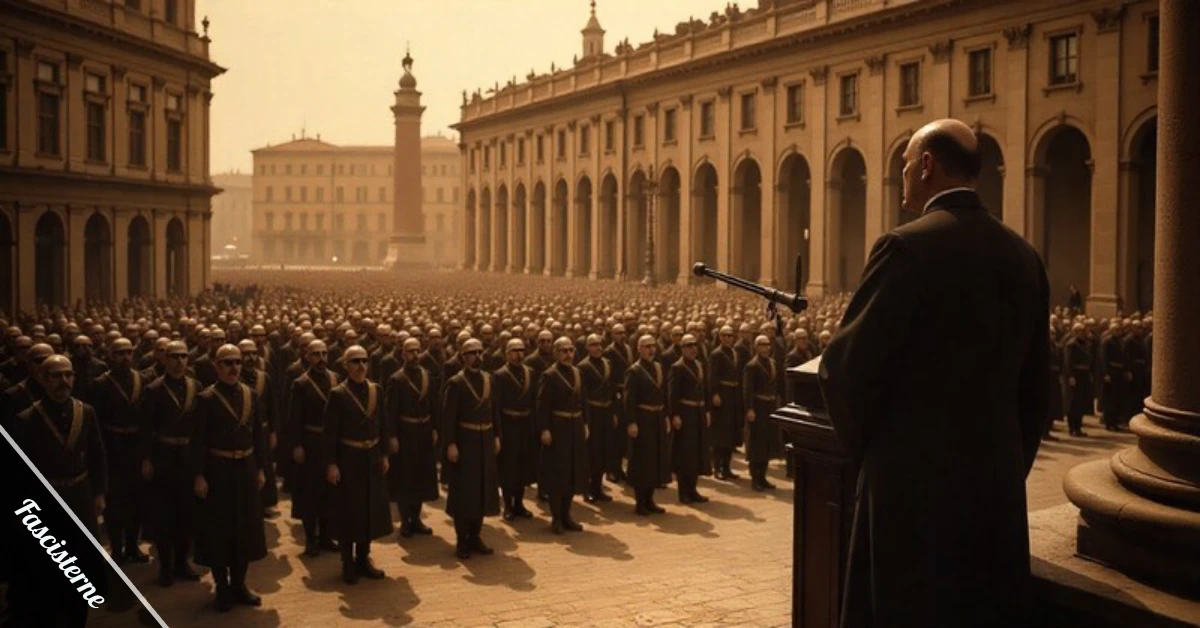
Fascisterne—the Italian fascists—created a political movement that reshaped Europe in the early 20th century. Born from post-World War I chaos, this authoritarian ideology promised order, national pride, and strength through a totalitarian state. Under Benito Mussolini’s leadership, fascism transformed Italy and inspired similar movements across Europe, leaving a legacy that still demands study today.
Table Of Content
The Birth of Fascisterne in Post-WWI Italy
World War I devastated Italy. The country lost 600,000 soldiers and faced economic collapse. Veterans returned to unemployment, inflation spiraled, and strikes paralyzed cities. Middle-class Italians feared communist revolution while feeling betrayed by the Versailles Treaty’s meager territorial gains.
Benito Mussolini, a former socialist journalist, founded the Fasci Italiani di Combattimento in Milan on March 23, 1919. The name came from “fascio”—a bundle of rods bound around an axe that symbolized authority in ancient Rome. Early fascisterne recruited disaffected veterans, nationalists, and those terrified of Bolshevism.
The movement grew through violence. Black-shirted squadristi—fascist paramilitary gangs—attacked socialist offices, beat union organizers, and burned opposition newspapers. Liberal politicians, desperate for order, tolerated this brutality. On October 28, 1922, Mussolini organized the March on Rome. King Victor Emmanuel III, fearing civil war, appointed Mussolini prime minister. Democracy gave way without a shot being fired.
Core Ideology: What Fascisterne Believed
Fascisterne rejected both liberal democracy and socialist equality. Mussolini declared, “Everything within the state, nothing outside the state, nothing against the state.” Individual rights disappeared before the collective national destiny.
Ultra-nationalism drove fascist thought. The movement glorified Italy’s Roman past and demanded imperial expansion. Fascisterne saw nations locked in perpetual struggle where only the strong survived. War wasn’t a tragedy but a purifying force that revealed national character.
The economic model differed sharply from capitalism and communism. Fascisterne promoted corporatism—organizing society into “corporations” representing employers, workers, and state interests in each industry. Private property remained, but the state controlled production decisions. Class conflict would dissolve when workers and bosses united under fascist direction for national goals.
This Third Position claimed to transcend capitalism’s greed and communism’s chaos. Mussolini launched autarky campaigns like the “Battle for Grain” to make Italy self-sufficient. Reality was messier—big industrialists kept power while workers lost independent unions.
How Fascisterne Gained and Maintained Power
Violence paved fascism’s path. Between 1920-1922, squadristi murdered roughly 2,000 political opponents. After taking power, Mussolini formalized repression. The 1924 Matteotti Crisis—when fascists kidnapped and killed socialist deputy Giacomo Matteotti—should have toppled the regime. Instead, Mussolini crushed the remaining opposition, banned other parties, and established a dictatorship by 1925.
Control extended beyond parliament. Fascisterne infiltrated schools, forcing teachers to swear loyalty oaths. Textbooks praised Mussolini as Italy’s savior. The regime created OVRA, a secret police force that monitored dissent. Special tribunals tried political crimes. Opponents faced confinement—internal exile to remote southern villages.
The Role of Symbols and Spectacle
Fascisterne mastered propaganda and political theater. The fasces symbol appeared everywhere—on buildings, uniforms, and currency. Mussolini staged massive rallies in Rome, with thousands of blackshirts marching in perfect formation. The Duce spoke from balconies, jaw thrust forward, promising glory.
Architecture served ideology. The regime built monumentalist structures echoing imperial Rome—broad avenues, stark white marble, classical columns. The EUR district in Rome showcased this aesthetic. Even typography became fascist—the regime promoted stark, angular fonts suggesting strength and modernity.
The Corporate State Model
The corporate state reorganized the Italian economy into 22 corporations covering different industries. Each corporation included employer, worker, and government representatives who would supposedly collaborate for national benefit. The National Council of Corporations would coordinate economic planning.
This system crushed genuine worker power. Fascist unions replaced independent ones. Strikes became illegal. Wages stagnated while corporate profits rose. The myth of class harmony masked continued exploitation—now without workers’ ability to resist.
Autarky policies pursued self-sufficiency. The Battle for Grain subsidized domestic wheat production, making Italy less dependent on imports but raising bread prices. The Battle for Births encouraged women to have more children through tax incentives and propaganda, aiming to grow the population for military might.
These campaigns delivered mixed results. Grain production increased, but it never achieved full independence. Birth rates rose temporarily but declined again. The corporate state enriched established industrialists while constraining economic dynamism.
Daily Life Under Fascisterne Rule
Fascism penetrated ordinary existence. The Opera Nazionale Balilla organized youth from ages 8-18 into uniformed groups. Boys received military training and political indoctrination. Girls learned domestic skills and the importance. By 1930, over 2 million children participated.
The Opera Nazionale Dopolavoro (National After-Work Organization) controlled leisure time. This agency organized sports, theater, tourism, and recreation—always infused with fascist values. Workers attended regime-sponsored events rather than independent clubs. The state monitored even relaxation.
Women faced contradictory pressures. Fascist ideology celebrated women as mothers responsible for producing future soldiers. The regime offered incentives for large families and restricted women’s employment outside the home. Yet economic necessity kept many women working. The gap between fascist rhetoric and reality frustrated women while limiting their opportunities.
The Catholic Church made peace with fascism through the 1929 Lateran Treaty. This agreement recognized Vatican sovereignty and made Catholicism Italy’s state religion. In exchange, the Church endorsed Mussolini’s regime. This alliance gave fascism religious legitimacy while securing Church interests.
Fascisterne Beyond Italy
Fascism spread beyond Italy’s borders, though taking distinct forms elsewhere. In Spain, José Antonio Primo de Rivera founded the Falange in 1933, blending fascist ideas with Spanish Catholic traditionalism. Francisco Franco later used Falangist support while never fully embracing fascist ideology.
Romania’s Iron Guard mixed fascism with mystical Orthodox Christianity and virulent antisemitism. This movement proved more violent and less state-centered than Italian fascism, prioritizing spiritual nationalism over Mussolini’s bureaucratic control.
Austrian Engelbert Dollfuss created Austrofascism in the 1930s—an authoritarian corporatist regime that borrowed fascist methods while opposing Nazi Germany. Portugal’s António Salazar built Estado Novo using corporatist economics and authoritarian politics but without fascism’s revolutionary energy or mass mobilization.
Latin American movements like Brazilian Integralism adopted fascist aesthetics—green shirts, Roman salutes, mass rallies—while adapting ideology to local contexts. These variations show fascism as a template modified by national traditions rather than rigid ideology applied identically everywhere.
The Fall and Lasting Legacy of Fascisterne
Military overreach destroyed fascism. Mussolini’s imperial ambitions led to the disastrous invasion of Ethiopia (1935) and alliance with Nazi Germany. Italy entered World War II unprepared. After defeats in Greece and North Africa, the Allied invasion of Sicily in 1943 broke the regime. The Fascist Grand Council voted no confidence in Mussolini on July 25, 1943. The king arrested him.
German commandos rescued Mussolini, who established the puppet Italian Social Republic in northern Italy. This rump state controlled little and satisfied nobody. On April 28, 1945, Italian partisans captured and executed Mussolini. His body hung upside down in Milan’s Piazzale Loreto—a grim ending for the man who promised eternal glory.
Fascisterne’s legacy extends beyond military defeat. The movement demonstrated how economic crisis, political dysfunction, and nationalist resentment create conditions for authoritarianism. It showed how violence, spectacle, and propaganda can mobilize masses. It revealed how democratic institutions collapse when defenders lack the courage to resist.
Modern democracies still face echoes of fascist tactics—scapegoating minorities, glorifying mythical pasts, attacking the free press, and demanding absolute loyalty. Studying Fascisterne isn’t an academic exercise. Understanding how this movement arose, functioned, and ultimately failed provides tools for recognizing similar dangers before they mature.
The Fascisterne movement began with promises of order and greatness. It delivered repression, war, and ruin. That trajectory—from crisis to authoritarianism to catastrophe—remains the essential lesson. Democratic societies require constant vigilance, institutional strength, and citizens willing to defend pluralism against those who promise simple solutions through strongman rule.







No Comment! Be the first one.