
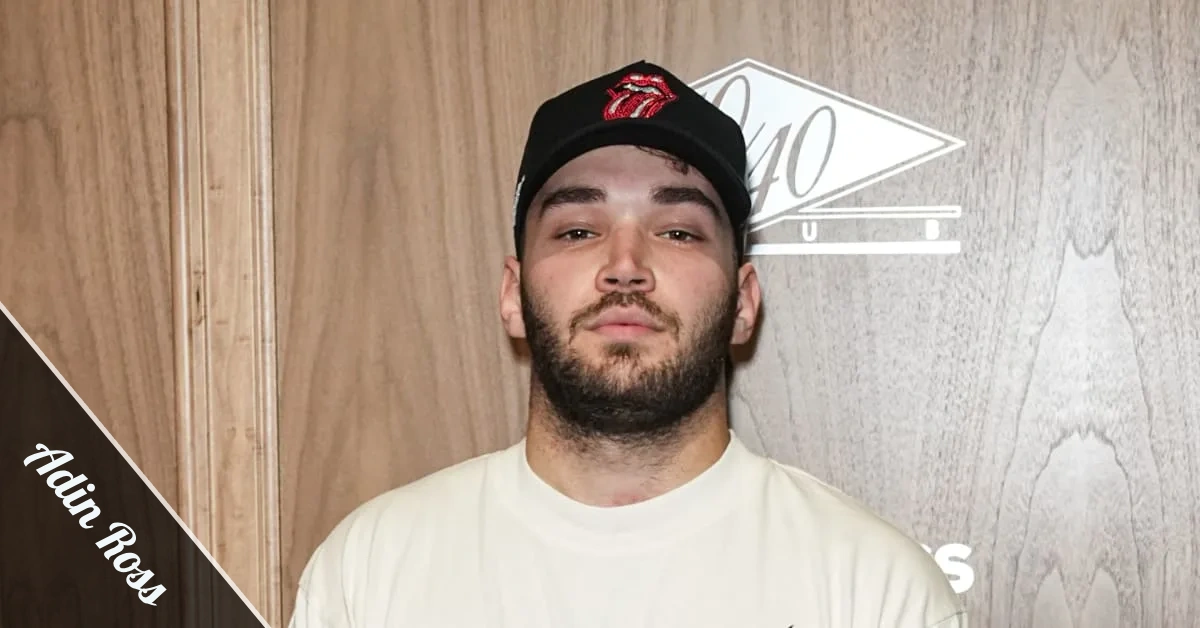
You’ve probably seen his name trending. Maybe someone mentioned him after a wild celebrity interview. Or you caught wind of another platform ban.
Who is Adin Ross isn’t your average internet personality. He’s built a streaming career that’s equal parts impressive and chaotic. From bedroom broadcasts to sitting down with Donald Trump, this 24-year-old has become one of the most talked-about names in online entertainment.
Some people watch him for the unpredictable energy. Others can’t look away from the controversies. Either way, you’re about to get the full picture of who this guy really is and why millions tune in.
The Florida Kid Who Bet Everything on Streaming
Ross entered the world on October 11, 2000, in Boca Raton, Florida. His childhood bounced between New York City and eventually landed in Three Rivers, California. He attended Woodlake High School while juggling homework and his first streaming experiments.
Back in 2018, most high schoolers were stressing about prom. Ross was building an audience playing NBA 2K. His early content focused on video games, a common entry point for streamers trying to find their voice.
The breakthrough came when he connected with Bronny James through an NBA 2K streaming group. That connection eventually led to a virtual meeting with LeBron James himself. Suddenly, the kid from Florida had access to most streamers that he could only dream about.
By 2022, Ross was already a millionaire, driving a Lamborghini. The gaming nerd had transformed into a cultural connector. His pivot from video games to celebrity interviews changed everything about his career trajectory and earning potential.
From Twitch Royalty to Permanent Exile
Twitch made Ross a star. The platform also kicked him out for good.
Between 2021 and 2023, Ross racked up multiple temporary bans. Each suspension came with drama. One happened after a guest used a homophobic slur during his stream. Another followed after his unmoderated chat displayed racist and antisemitic messages that he never addressed.
February 2023 brought the final hammer. Twitch permanently banned Ross for “hateful conduct” after he showed his toxic live chat on stream. The messages were vile. Ross didn’t stop them. Twitch said goodbye.
The ban could have ended his career. Instead, it became his greatest pivot point. Kick, a Twitch competitor launched in December 2022, offered Ross a lifeline. According to reports, that lifeline came with a nine-figure contract.
Ross claims the reported $100 million deal is “exaggerated.” Even if the real number is half that, it’s still generational wealth. He now pulls between $33,333 and $50,000 per hour he streams on Kick, according to his own statements.
Twitch eventually let him back in February 2025. But by then, Ross had already made Kick his home. The platform gave him looser content guidelines and a bag too big to walk away from.
The Money Behind the Madness
Let’s talk numbers. Ross’s net worth sits at approximately $24 million as of 2024, according to MoneyMade. That’s the conservative estimate.
His Kick deal alone could push his annual income between $50 million and $75 million. Those calculations assume he streams around 125 hours monthly. Of course, taxes and team cuts reduce that take-home significantly.
Beyond streaming payments, Ross earns through sponsorships, merchandise, and events. Last May, he hosted a celebrity boxing event in Miami. The event made headlines when Antonio Brown got arrested for attempted murder charges after an altercation.
Even his real estate moves grab attention. This summer, Ross dropped $25 million on a home in Davie, Florida. For a guy who started streaming from his bedroom, that’s not just success, it’s validation.
His audience spans multiple platforms. As of December, he’s sitting on 4.59 million YouTube subscribers, over 7 million Twitch followers, and 1.9 million on Kick. Those numbers translate to serious influence and even more serious revenue.
The financial success isn’t clean. It’s attached to controversies that would sink most careers. But Ross has mastered the art of turning negative attention into views. And views equal dollars.
When Celebrity Interviews Became His Superpower
Ross figured out something crucial early on. People don’t just watch streamers for gameplay anymore. They want access to personalities they can’t reach anywhere else.
His interview roster reads like a who’s who of controversial figures and A-list celebrities. Drake showed up. Jake Paul stopped by. Donald Trump sat down for a 90-minute stream that peaked at over 500,000 concurrent viewers.
That Trump interview in August 2024 changed Ross’s trajectory completely. He gifted Trump a Rolex and a customized Tesla Cybertruck. The internet exploded. Ross endorsed Trump for president. The Kamala Harris campaign condemned the appearance, calling out Ross’s history of racial slurs.
Ross has also platformed Nick Fuentes, an openly antisemitic white supremacist, multiple times. In November, he praised Fuentes at a streamer awards event. The backlash was immediate. Ross didn’t care.
Andrew Tate, facing human trafficking charges in Romania, became another regular collaborator starting in 2022. In March 2024, Ross accidentally revealed Tate’s plans to flee Romania. Tate got arrested. Ross apologized.
These aren’t mistakes. They’re calculated decisions. Ross knows exactly what he’s doing. Controversy drives engagement. Engagement drives money. The cycle repeats.
Even athletes want in. Puka Nacua, Mookie Betts, Neymar, and Teofimo Lopez have all appeared on his streams. The NFL might not officially endorse these appearances, but it recognizes the reach Ross offers.
Ross tried bringing fellow streamer N3on into the Rams facility after interviewing Nacua. The coaching staff shut it down. But the attempt alone showed how far Ross’s influence had stretched into professional sports.
The Controversies That Define His Brand
You can’t talk about Ross without addressing the elephant in every room he enters. His career is controversial.
In December 2022, Ross planned to host rapper Ye on his stream. Ross, who is Jewish, canceled after Ye allegedly told him, “You Jews aren’t going to tell me what I can and can’t say.” The incident highlighted Ross’s willingness to platform antisemitism until it personally affected him.
His relationship with Bronny James, which once boosted his career, soured publicly. Bronny unfollowed Ross on social media in July 2025 after Ross criticized LeBron James for dancing to Kendrick Lamar’s “Not Like Us.” The falling out showed that even celebrity connections have limits.
The Mookie Betts stream in December raised eyebrows when Betts commented on Jewish people typically being hairy after Ross removed his shirt. The casual stereotyping went viral. Neither apologized.
These moments accumulate. Critics argue Ross normalizes hate speech by giving extremists a platform. Supporters claim he’s just creating unfiltered entertainment. The truth probably lives somewhere messier than either side admits.
What’s undeniable is that this works for Ross. His audience isn’t looking for politically correct content. They want chaos. They want unpredictability. They want to see what he’ll say or who he’ll platform next.
What Makes People Keep Watching
Ross’s streams aren’t polished productions. They’re raw, unpredictable, and often uncomfortable. That’s the whole point.
His energy feels authentic, even when he’s making questionable decisions. Viewers describe his content as “high-energy” and “anything can happen.” That unpredictability keeps people coming back. You genuinely don’t know if you’re about to witness comedy, disaster, or both.
The celebrity access doesn’t hurt either. Where else can you watch a streamer gift a sitting president-elect a Tesla? Where else do professional athletes drop by for hours-long conversations about nothing and everything?
Ross also understands his audience. He speaks their language. He doesn’t pretend to be something he’s not. Whether you find that refreshing or problematic depends entirely on your values.
His migration to Kick also freed him from certain content restrictions. Twitch’s moderation, while imperfect, at least attempted to enforce community guidelines. Kick operates under looser standards. For Ross, that meant more freedom to push boundaries.
The Bigger Picture Nobody Talks About
Ross represents something larger than himself. He’s a case study in how internet fame operates in 2024 and beyond.
Traditional media can’t compete with the access streamers provide. You don’t need a network. You don’t need executives approving content. You need a camera, a personality, and zero fear of consequences.
The NFL and other organizations are watching. Commissioner Roger Goodell has talked about partnerships with creators reaching younger audiences. Ross, despite his controversies, proves that these partnerships work. His Nacua interview reached millions of impressions. That’s an influence traditional sports media can’t match.
The financial model also reveals how creator economics have shifted. Ross earns more per hour than most executives earn in months. His income doesn’t depend on advertisers who might pull out over controversies. Kick pays him regardless of who he platforms or what he says.
This creates an ecosystem where accountability takes a backseat to engagement. Ross can host white supremacists, face criticism, and continue streaming without meaningful consequences. The system rewards controversy. Until platforms or audiences demand better, nothing changes.
Where Ross Goes From Here
His return to Twitch in February 2025 opens new opportunities. He can now stream on both platforms, maximizing his reach and income. The dual presence means more content, more collaborations, and inevitably more controversies.
The celebrity boxing events might become a regular thing. Sports crossovers will likely continue. Ross has proven he can deliver audiences that teams and leagues desperately want. Despite reservations, athletes will keep showing up.
His influence on streaming culture is undeniable. Younger creators watch Ross and see a blueprint. Push boundaries, court controversy, and monetize the chaos. Whether that’s a positive influence is debatable. But it’s effective.
The question isn’t whether Ross will stay relevant. The question is how much further he’ll push the envelope before facing real consequences. So far, every ban, every controversy, every backlash has only made him bigger.
Conclusion
Adin Ross built an empire by doing exactly what traditional media said you shouldn’t do. He platformed extremists. He courted controversy. He turned bans into branding opportunities.
The result? Millions in the bank, millions of followers, and a spot at the center of streaming culture. Whether you respect the hustle or hate what he represents, you can’t ignore the impact. Ross changed the game by refusing to play by the rules. And right now, he’s winning.
