
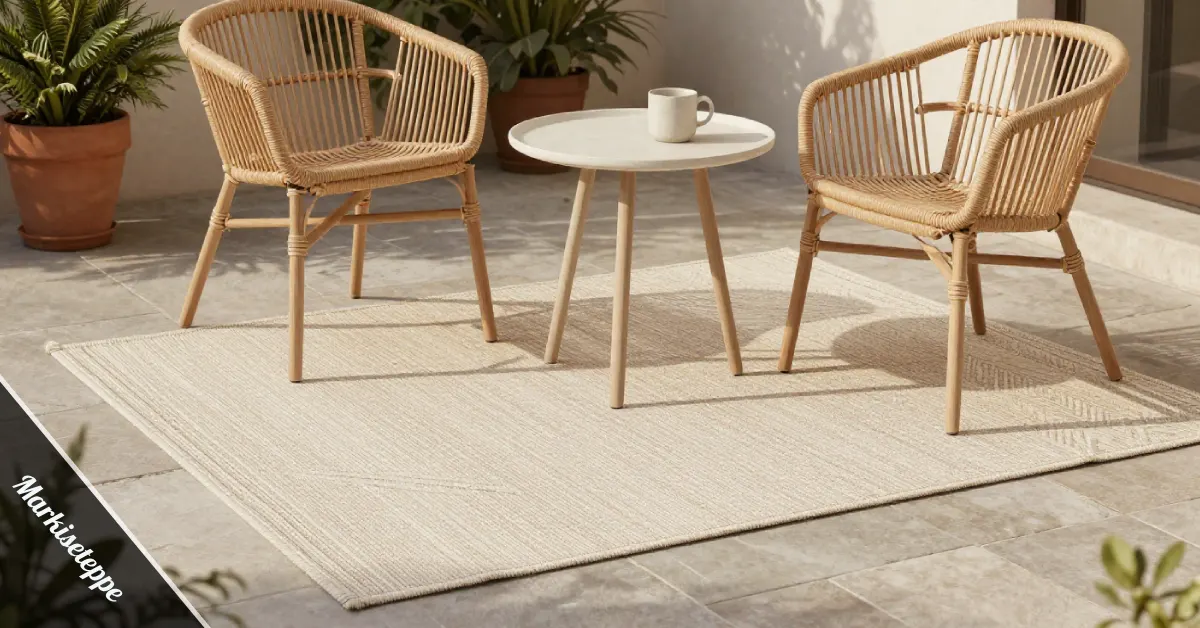
A markiseteppe is a weather-resistant outdoor mat or rug built for patios, balconies, terraces, and garden areas. Made from materials like solution-dyed acrylic or polypropylene, it resists UV rays, rain, and dirt without fading or breaking down after a season or two. Unlike standard indoor rugs dragged outside, a markiseteppe dries fast, stays soft underfoot, and holds its color through temperature swings and heavy foot traffic.
Choosing the right one comes down to size, material quality, and how exposed your space is to the elements. A well-maintained markiseteppe can last five to ten years with minimal effort — shake it out regularly, rinse with a hose when needed, and store it during extreme winters. Whether you’re working with a small apartment balcony or a full garden setup, this outdoor mat does more than protect your floor — it turns a bare concrete or tile surface into a space you actually want to spend time in.
What Exactly Is a Markiseteppe?
The word combines “markise” (awning in Norwegian) and “teppe” (carpet), and that pairing tells you a lot about how these mats are used. A markiseteppe is designed to sit in shaded or semi-exposed outdoor areas — under a pergola, on a covered terrace, or along a balcony railing — where regular rugs would soak through, mildew, and warp within weeks.
What separates a markiseteppe from a generic outdoor mat is the construction. The best versions use solution-dyed acrylic, where color is locked into the fiber before it’s even spun — not applied on top afterward. That process means the color runs all the way through, so UV exposure doesn’t strip it to a faded shell after one summer. Polypropylene versions are also common and more affordable, offering solid water resistance and fast drying times, though they tend to feel slightly stiffer underfoot.
The flat weave construction keeps debris on top rather than trapped inside, which makes day-to-day upkeep straightforward. Leaves, dirt, and dust brush off without much effort. On a practical level, that’s a meaningful difference from a thick indoor rug dragged outside and left to collect grime in its fibers.
Why More People Are Using Them
Outdoor living has shifted over the last few years. Urban apartments with small balconies, rooftop terraces, and compact garden patios have pushed people to treat every square meter outside as usable space — not just storage for a folding chair and a dead plant.
A markiseteppe plays directly into that shift. It anchors outdoor furniture the same way an area rug would anchor a living room setup. When your chairs, table, and outdoor cushions all sit on one rug, the space reads as a room rather than a random arrangement of objects on concrete.
Beyond aesthetics, the mat adds real comfort. Bare stone or tile gets hot in summer and cold in autumn. A breathable outdoor rug brings the temperature closer to neutral and makes walking barefoot far more comfortable. Families with young children who play on patios will feel that difference quickly.
One thing worth mentioning that most buying guides skip: eco-friendly and recycled-material options now exist in this category. Some markiseteppe products use recycled PET fibers — essentially made from repurposed plastic bottles — which perform comparably to virgin polypropylene while generating less waste. If sustainability factors into your purchase decisions, this is worth checking before you buy.
How to Pick the Right Size for Your Space
Getting the size wrong is the most common mistake. A rug that’s too small looks like an afterthought — a small island floating in the middle of a large patio with furniture legs sticking off the edges.
The standard approach: measure your seating area first, then go slightly larger. For a balcony with two chairs and a side table, aim for a mat where all furniture legs sit on the rug, or at least the front legs. For a full patio dining setup, use the table and chairs fully extended as your guide, then add around 30–40 cm on each side as a border.
For small apartment balconies — a space this category often ignores — a runner-style markiseteppe can work well along one wall or under a lounger, making the space feel defined without overwhelming it. Even a compact 80 x 150 cm mat transforms a tight urban balcony into something that feels considered.
Caring for Your Markiseteppe
Maintenance is one of the strongest arguments for choosing a quality outdoor mat over cheaper alternatives. The upkeep is low, but a few habits keep it looking better longer.
For regular dirt and debris, shake it out or sweep it with a stiff broom. A vacuum with just the suction setting (no beater bar) also works well. For spills or mud, mix mild dish soap with warm water, scrub with a soft brush, rinse thoroughly with a hose, and let it air dry flat or draped over a railing. It dries faster than you’d expect.
Two or three times a season, give it a more thorough scrub with the same soap-and-water mix and a stiffer brush. Rinse completely and let it dry in the sun before putting furniture back on it.
If you live somewhere with hard winters, rolling the mat and storing it in a dry shed or garage extends its life noticeably. Snow and ice sitting on a rug for months won’t destroy it, but it shortens the lifespan faster than storage does.
Can You Use a Markiseteppe on Grass?
Yes, with one practical consideration. Placing any rug on grass for extended periods blocks sunlight and traps moisture, which kills the grass underneath. For occasional or short-term use — a garden party, a weekend setup — a markiseteppe on grass is fine. The flat weave and drainage properties of most markiseteppe materials handle moisture better than a solid mat would.
For longer-term placement, use it on paved, tiled, or decked surfaces where drainage isn’t an issue. If you want a rug-like feel on a lawn area, look for permeable options or place the mat on a gravel base instead.
Final Verdict
A markiseteppe isn’t a premium purchase for its own sake — it solves a real problem. Outdoor spaces without any flooring treatment feel unfinished and uncomfortable. Once you add a well-fitted, weather-resistant outdoor mat, the space actually gets used. You sit there longer, host more easily, and stop replacing cheap mats every season.
Spend time on size and material quality before you buy. Solution-dyed acrylic gives the best color longevity. Polypropylene works well on a tighter budget. Either way, buy larger than you think you need and pair it with a non-slip outdoor pad if your surface is smooth tile or wood.
The difference between a patio that collects dust and one you eat breakfast on every morning is often just a few small decisions — and a good markiseteppe is one of the clearest ones.
FAQs
What exactly is a markiseteppe, and how is it different from a regular outdoor rug?
A markiseteppe is purpose-built for outdoor conditions — UV resistance, fast drying, and weather tolerance are built into the material from the start. Regular rugs used outdoors break down faster, absorb moisture, and lose color quickly. The construction and fiber treatment are fundamentally different.
How do I pick the right size markiseteppe for my balcony or patio?
Measure your seating or dining arrangement first. Go slightly larger than that footprint — all furniture legs ideally on the rug. For small balconies, a runner or compact size still works well to define the space without crowding it.
What’s the best way to clean and maintain a markiseteppe to make it last longer?
Sweep or shake regularly, spot-clean spills with mild soap and water, and do a full hose-down a few times a season. Store it rolled in a dry space during harsh winters.
Can I use a markiseteppe on grass without damaging my lawn?
For short-term use, yes. Extended placement will damage the grass underneath by blocking light and trapping moisture. On grass, keep use to a day or weekend at most, or place the mat on a hard surface instead.
