
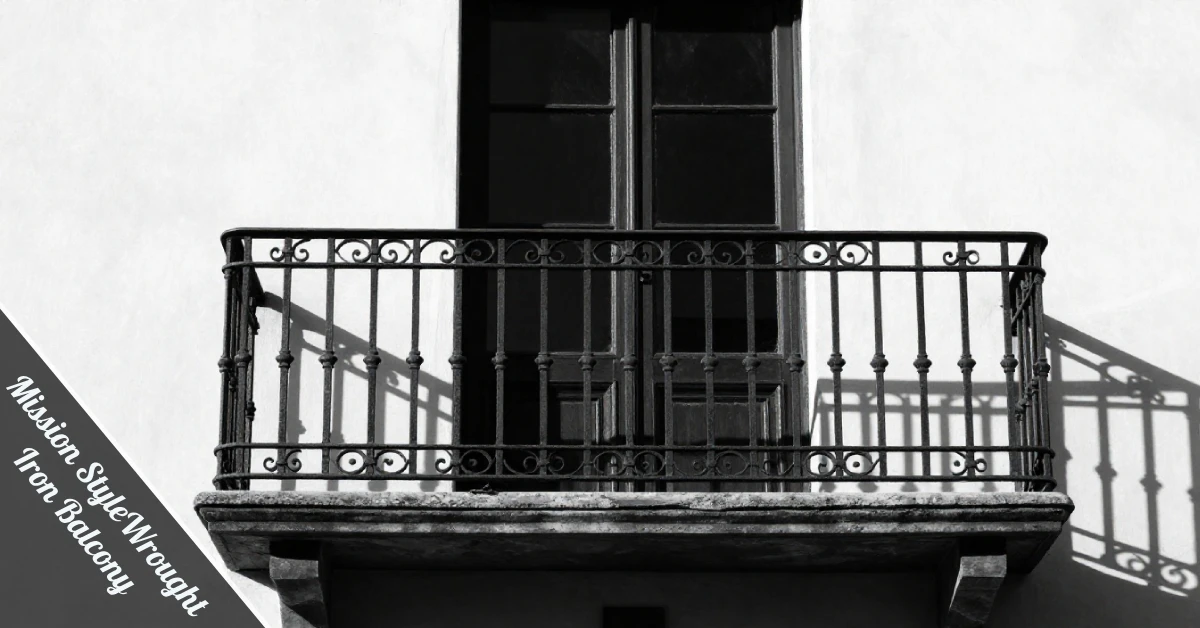
You know that moment when you’re scrolling through balcony designs, and everything looks like it belongs in a royal palace or a gothic cathedral? Yeah, not your vibe. You want something that feels architectural, not decorative. Something that says “I thought about this” without screaming “look at me.”
That’s exactly where the Mission Style Wrought Iron Balcony steps in. It’s the architectural equivalent of a perfectly tailored gray suit—understated, confident, and impossible to hate.
What Makes Mission Style Different (And Why You Should Care)
Walk through any older neighborhood, and you’ll spot the difference immediately. Some railings look like they’re trying too hard—curls upon curls, twists that go nowhere, metal pretending to be lace. Then you see a Mission-style railing and something clicks.
It’s the clean geometry. The straight vertical lines. The honest structure that doesn’t hide behind ornamentation. This look pulls from the Mission Revival and Arts & Crafts movements, which basically told Victorian design to calm down and touch grass.
These homes near San Antonio get it. The style works because it lets materials speak for themselves. No fake flourishes. No busy patterns. Just strong lines doing their job while looking good.
The Mission Checklist: What to Look For
- Straight vertical pickets are your foundation. They create rhythm without distraction. Think of them as the bassline—consistent, steady, holding everything together.
- Strong top and bottom rails frame the design. They should feel substantial but not chunky. Like a good door frame—you notice it’s right more than you notice it exists.
- Geometric patterns show up in the details. Rectangles, squares, grid layouts. Nothing curved unless necessary. Even then, curves stay subtle.
- Consistent spacing matters more than you’d think. Too wide and it feels unfinished. Too tight and it gets heavy. The sweet spot? Enough to breathe, not enough to escape through.
Where Mission Railings Actually Work Best
Juliet Balconies
These sit flush against doors or windows with barely any depth. Perfect for Mission style because the clean lines add character without blocking light. You get that indoor-outdoor connection without sacrificing safety.
Small Walk-Out Balconies
Got a bedroom or home office with a door to nowhere? Mission railings turn that into somewhere. The vertical lines keep sightlines open while providing actual security. Standing there with morning coffee feels right.
Long Terraces and Wraparounds
Here’s where consistency becomes your best friend. Repeating the same geometric pattern across distance creates unity instead of chaos. Your eye follows the design naturally instead of bouncing around confused.
Real Talk About Materials
Here’s what nobody tells you about “wrought iron” today. Most of it isn’t actually wrought iron. It’s mild steel fabricated to look the part. And honestly? That’s fine. Better, even.
Modern mild steel is stronger, more affordable, and easier to work with. It delivers that classic appearance without the traditional baggage. The key is knowing what you’re actually buying.
Solid bars vs. hollow tubes matter. Solid feels premium. Heavier in the hand. More substantial when installed. Hollow tubes can work for larger installations where weight becomes a concern. Both have their place.
The craftsmanship shows in the welds. Smooth joints, clean connections, consistent finishing. Look at projects like these floors for reference—attention to detail separates good from great.
Safety Stuff You Actually Need to Know
Let’s get practical for a second. Safety codes exist because gravity is undefeated. You want a railing that looks good, but you need one that keeps people upright.
- Guardrail height varies by location. Most places require specific minimums, especially for upper levels. Check local regulations before you fall in love with a design that won’t pass inspection.
- Baluster spacing matters if you’ve got kids or dogs running around. Openings need to be narrow enough to prevent accidents while maintaining that clean Mission look. Good fabricators can adjust spacing without breaking the design.
- Load capacity isn’t optional. Balconies attached to stucco, masonry, or older brick walls need proper mounting techniques. In high-wind areas? Consult an engineer. Worth every penny.
Getting the Proportions Right
Here’s where most DIY attempts go wrong. They nail the style but butcher the scale. A Mission railing that’s too thin looks flimsy. Too thick looks industrial. The sweet spot? Match your iron thickness to existing architectural details.
Look at your trim, your beams, your support posts. The railing should feel visually connected to these elements. When everything aligns, the balcony looks like it grew there naturally instead of getting bolted on later.
Pattern scale matters too. Dense spacing feels heavy. Too open looks unfinished. View mockups if possible. See how the pattern reads from inside the room, from the street, from across the yard. Simple adjustments in spacing change everything.
Need privacy? Tighter picket spacing works without breaking style. Lower solid panels can help too. Just keep it geometric and simple.
Finishes That Last (And Look Authentic)
Color choices matter more than most people realize. Matte black, satin black, dark bronze—these are your friends. They complement wood, stucco, and stone without competing for attention.
Powder coating vs. paint comes down to longevity. Powder coating generally resists the weather better. Chips less. Fades slower. Paint can work with proper application, but expect more maintenance over time.
Living near the coast? Humidity changes everything. You need proper rust protection—inhibiting primer, durable topcoat, and regular inspections. Check these designs in coastal areas for reference. Moisture collects at joints and mounting points. Prevent buildup there, and your railing lasts decades.
Maintenance Without the Headache
Look, you’re not signing up for a second job here. Mission-style railings don’t demand much. But ignoring them completely? That’s how rust starts.
- Seasonal inspections catch problems early. Walk your balcony every few months. Check corners and welded joints where moisture hides. Look for loose hardware or finish damage.
- Small chips get touched up immediately. Light sanding, primer, and matching paint. Takes fifteen minutes. Prevents rust from spreading. Most people skip this, then wonder why their railing looks rough after two years.
- Cleaning stays gentle. Mild soap and water. Soft cloth or sponge. No pressure washers up close. No abrasive pads. Harsh chemicals strip protective coatings. Treat the finish right, and it treats you right.
What Actually Affects the Price
- Size drives cost. Linear feet add up. Corners require extra labor. Larger panels mean more material. Simple math.
- Design complexity matters. Straight-line Mission designs cost less than custom panels or decorative inserts. Even small additions increase fabrication time. Prioritize what matters most to you.
- Finish quality influences price. High-quality powder coating costs more upfront but saves on maintenance. Cheap finishes fail faster. You decide where to invest.
- Installation challenges add up. Limited access. Upper-level placement. Permit requirements. Old homes with weird wall compositions. These all affect the final numbers.
How to Hire Without Getting Burned
Get a clear quote with visuals. Drawings or mockups prevent misunderstandings. You want everyone to agree on the same design before metal gets cut.
Share reference photos. “Mission style” means different things to different people. Images communicate spacing, simplicity, and feel better than words ever will.
Ask about lead times and coating processes. Know how future repairs work. Can you get replacement pieces? Touch-up materials? Peace of mind comes from knowing help exists when needed.
Check out projects like these for reference quality. Good fabricators welcome questions about their process. If they get defensive? Keep looking.
The Bottom Line
A Mission Style Wrought Iron Balcony combines simple geometry, strong lines, and honest craftsmanship. It’s timeless without trying hard. Practical without feeling cheap. Architectural without showing off.
Focus on proportion. Pick quality materials. Meet safety standards. Choose protective finishes. Take measurements seriously. Balance your pattern. Confirm proper installation.
Do these things right, and your balcony works for decades. It enhances your home’s exterior while providing actual safety. No weird scrolls. No dated flourishes. Just clean lines doing exactly what they should.
Frequently Asked Questions
Can Mission style look elegant without scrolls or curls?
Absolutely. The elegance comes from proportion and precision, not decoration. Clean lines done right beat fancy curls every time.
What finish holds up best in rainy or coastal areas?
Powder-coated finishes win here. They resist rust, fading, and chipping better than standard paint. Pair with regular inspections, and you’re set.
Can I add Mission railings to an older home?
Usually yes. Get the structure checked first. Make sure it supports the load. Use proper anchoring per local codes. Good to go.
How do I match new railings with existing window guards?
Match line thickness, spacing, and finish color. Similar geometric patterns keep everything looking connected. Consistency is your friend.
