
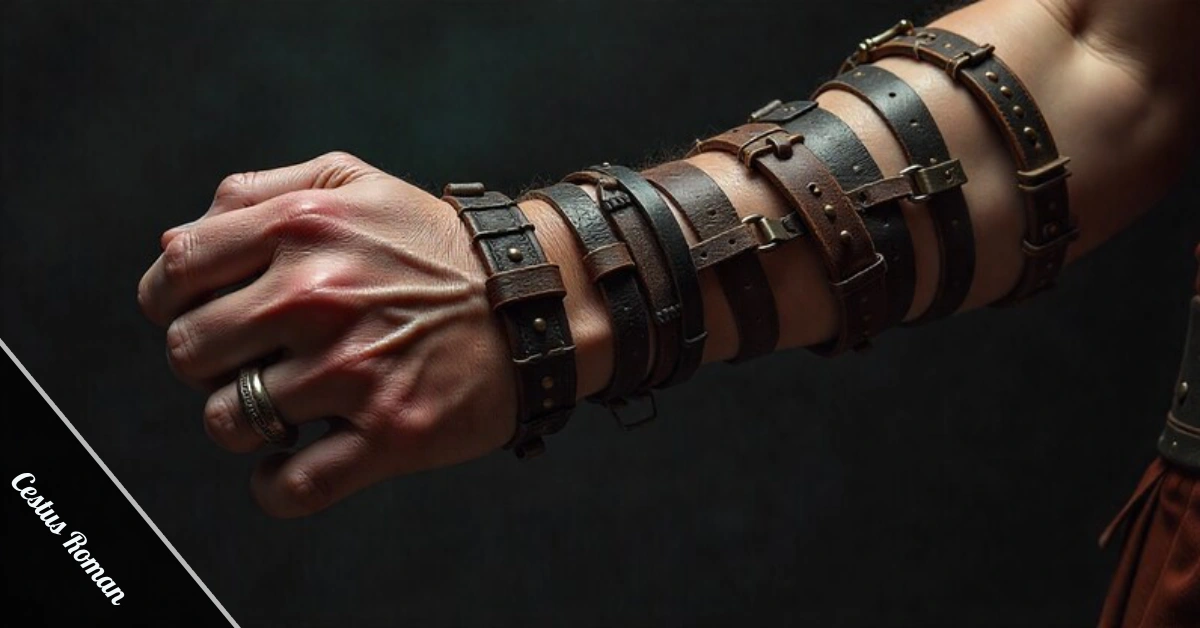
The Cestus Roman was a brutal boxing glove used by ancient gladiators, constructed from leather straps reinforced with metal studs or spikes. Based on Greek designs, this weapon turned bare-handed combat into a deadly spectacle where fighters risked death with every punch landed in the arena.
What the Cestus Was and Why Romans Used It
Romans called this weapon “castra,” derived from the Latin word “caedere,” meaning “to strike.” Many sources mistakenly reference it as “cesta,” but the proper term is cestus (plural: castra or cesti). This confusion stems from similar-sounding words in ancient texts and modern misinterpretation.
Greeks invented the original version called himantes – simple leather straps that protected boxers’ hands during Olympic competitions. Romans took this concept and transformed it into something far more dangerous. Where Greeks focused on protection, Romans emphasized entertainment and violence.
The cestus served a specific purpose in gladiatorial games. Unskilled or untrained fighters often wore these weapons because they required less technical training than swords or tridents. You learned to punch, guard your head, and hope your opponent dropped first. The weapon fit Rome’s appetite for blood sport while providing a different spectacle from traditional blade combat.
Cestus fighters occupied the lowest social rank among gladiators. They were slaves or “infames” – citizens stripped of most rights due to their association with blood and death. Most quality gladiators avoided cestus matches because the risk of permanent injury or death outweighed any potential glory.
Construction and Design of the Roman Cestus
The basic cestus started with hard leather straps that wrapped around the fighter’s hand and forearm. Workers created a pattern that enclosed the fist while providing wrist stability. The straps formed multiple layers, each sewn together to create a rigid structure.
Romans added metal components to increase damage potential. The simplest versions featured iron rings circling the knuckles. One solid punch with these rings could shatter facial bones or crack skulls. More elaborate designs included copper or iron studs embedded across the striking surface. The deadliest versions incorporated sharp spikes that could puncture flesh and organs.
Later designs extended protection up the forearm with thicker leather sleeves. This addition helped fighters block incoming punches without breaking their arms. Some versions included padding on the defensive surfaces while keeping striking areas hard and unforgiving.
The weight varied based on metal content. Basic leather wraps weighed around 1-2 pounds per hand. Adding metal rings increased weight to 3-4 pounds. Spiked versions reached 5-6 pounds, turning each hand into a weighted club. Fighters wore them in pairs, making every movement require significant arm strength.
Construction materials came from available resources. Leather came from cattle, horses, or goats. Blacksmiths forged iron and copper components using standard metalworking techniques. Lead or stone sometimes filled leather pouches to add striking weight without visible spikes. Each cestus was custom-fitted to the fighter’s hand size and arm length.
How Cestus Gladiators Fought in the Arena
Cestus combat resembled modern boxing, but with fatal consequences. Fighters circled each other, looking for openings while protecting their heads and bodies. The forearm padding served as their only defense – no shields, no armor, no backup weapons.
Match strategies changed based on glove type. Battles using unadorned leather allowed fighters to trade blows more freely. Combatants knew they could absorb several hits before serious damage occurred. These matches lasted longer and showcased technical boxing skills.
Spiked or studded cestus fights demanded different tactics. One mistake could end your life. Fighters moved cautiously, waited for perfect openings, and committed to strikes only when confident. Defensive positioning became more critical than offensive aggression. A single landed punch could decide the match.
Romans sometimes pitted cestus fighters against armed gladiators. These unusual matchups tested whether boxing skills could overcome weapons advantages. Historical records mention these contests but provide few details about outcomes or frequency.
The goal remained simple: batter your opponent until they couldn’t continue. Death happened frequently, especially with metal-enhanced weapons. Crowd reactions intensified when blood flowed freely. Cestus matches delivered the visceral violence Roman audiences craved.
Training Methods for Cestus Fighters
Gladiatorial schools (ludus) provided basic cestus training for low-value fighters. Instructors taught fundamental punching techniques, footwork patterns, and defensive positioning. Training emphasized endurance because matches continued until one fighter fell.
Fighters practiced on wooden posts wrapped in padding. These stations allowed repetitive striking without injuring training partners. Sparring sessions used lighter practice gloves to build timing and distance judgment. Full cestus equipment appeared only during final preparation before actual arena combat.
Selection for cestus fighting typically fell to expendable slaves or criminals. Trainers rarely wasted promising gladiators on this dangerous, low-prestige weapon. Physical strength mattered more than technical skill. Large, powerful men who could deliver crushing blows received preference over smaller, quicker fighters.
Historical Evidence and Archaeological Finds
Roman historian Tacitus mentioned cestus fighters in his writings, describing a Gaulish contingent of trainee gladiators during the Aeduian revolt of 21 AD. His accounts confirm these fighters existed as a recognized category within gladiatorial entertainment.
Artistic depictions appear on Roman pottery, flatware, and wall paintings throughout former empire territories. These images show fighters wearing pairs of hand coverings with visible metal reinforcement. The artwork captures fighting stances, match scenarios, and crowd reactions.
Theagenes of Thasos won the Olympic cestus championship in 480 BC and reportedly killed most of his opponents. His legendary status demonstrates how dangerous even Greek versions proved before the Romans added extra metal components.
Physical artifacts remain rare. Leather deteriorates over centuries, leaving few intact examples. Museums occasionally display reconstructed versions based on artistic depictions and written descriptions. The British Museum, Vatican Museums, and various Italian archaeological collections house related artifacts and documentation.
Greek Olympic connections established cestus fighting as a legitimate sport before the Romans transformed it. Original Greek competitions emphasized athletic skill and used minimal protection. Romans abandoned sporting pretense and created pure combat entertainment.
The Social Reality of Cestus Combat
Cestus fighting earned its reputation as a “poor man’s sport” because betting dominated its appeal. Wealthy Romans wagered on outcomes while avoiding the fights themselves. The unpredictability of bare-handed combat created gambling excitement that structured gladiatorial matches couldn’t match.
Fighters held no prestige. Unlike murmillo or retiarius gladiators, who earned respect for their skills, cestus fighters were disposable entertainment. They received minimal training, poor equipment, and faced frequent death or crippling injury. Survival rates dropped significantly compared to other gladiator types.
Social status marked cestus participants as blood-polluted and associated with death. Roman law restricted their citizenship rights, prohibited certain marriages, and barred them from holding public office. Even if a fighter won freedom, the social stain remained permanent.
The sport faced criticism even by Roman standards. Accounts suggest authorities banned cestus fighting around 393 AD because the brutality exceeded acceptable levels – remarkable given Roman tolerance for violence. This ban coincided with Christianity’s growing influence and changing attitudes toward bloodsport. However, historical evidence for this specific ban remains uncertain, and cestus fighting likely continued in provinces long after any official prohibition.
Cestus vs Other Gladiator Weapons
| Weapon | Construction | Armor | Fighting Style | Social Status |
|---|---|---|---|---|
| Cestus | Leather straps, metal studs/spikes | None (forearm padding only) | Close-range boxing, devastating single strikes | Lowest – expendable fighters |
| Gladius | Iron short sword, 60-80cm blade | Varied by type (shield, helmet, greaves) | Thrust and slice, technical sword work | Mid to high-skilled fighters |
| Trident | Three-pronged spear, 2-meter length | Net, minimal armor | Distance control, entanglement tactics | Mid – specialized retiarius class |
The cestus offered unique advantages. Close-quarters combat prevented weapon-wielding opponents from using reach advantages. A skilled cestus fighter could slip inside sword range and deliver fatal head blows. The metal reinforcement penetrated lighter armor that deflected blade strikes.
Vulnerabilities proved significant. Any opponent maintaining distance dominated the match. Cestus fighters couldn’t pursue effectively without defensive tools. Trident users speared them from safety. Sword fighters cut them during the approach. The weapon only worked if you reached striking range and landed clean hits.
Speed and power determined cestus effectiveness. Larger fighters used weight to crush opponents. Smaller, quicker fighters relied on precision strikes to vital areas – temple, throat, solar plexus. Both approaches required closing distance before the opponent’s weapon found its mark.
Roman audiences appreciated cestus matches for their simplicity and violence. No complex tactics, no elaborate armor – just two fighters trying to beat each other unconscious or dead. This raw brutality filled a specific entertainment niche that swords and nets couldn’t satisfy.
Why the Cestus Matters Today
The cestus represents Roman culture’s darker elements. It shows how entertainment priorities transformed Greek athletic traditions into lethal spectacles. The weapon’s design reveals Roman engineering applied to maximize injury and death for crowd pleasure.
Modern combat sports trace their lineage back to cestus fighting. Boxing gloves evolved from protecting fighters to enabling harder, longer battles. Mixed martial arts explores similar questions about weapon advantages versus bare-handed skill. The ancient debates about boxing’s effectiveness against armed opponents continue in modern contexts.
Historical interest persists because the cestus symbolizes extreme violence within organized sport. It demonstrates how societies balance entertainment, ethics, and human life. Roman audiences accepted cestus death matches as normal entertainment – a perspective that challenges modern assumptions about progress and civilization.
