
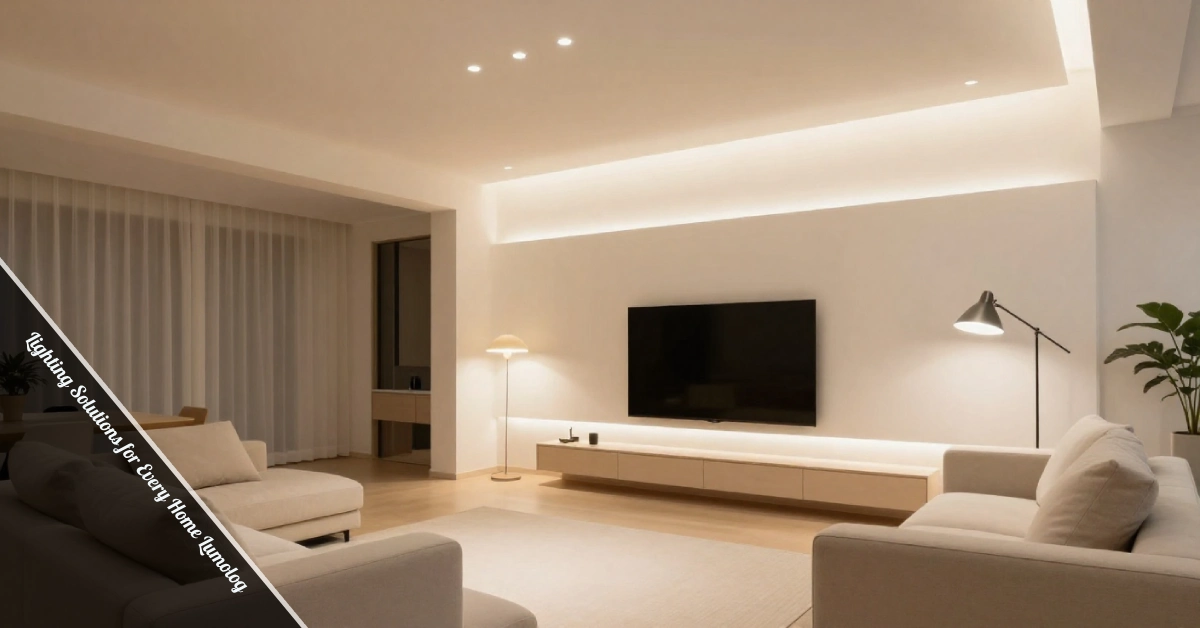
Effective home lighting combines three layers: ambient (general), task (focused), and accent (decorative). Each room needs a different color temperature, measured in Kelvin, to match its function. Using LED bulbs, dimmers, and smart controls, you can cut energy use by up to 75% while creating a space that looks and feels exactly right.
How Lumolog Lighting Solutions Work in Every Room at Home
Most people have lived in a poorly lit home without realizing it. One bright overhead bulb in the center of the ceiling. A lamp in the corner that casts shadows everywhere else. A bathroom where you can barely see your face clearly. It is more common than you might think.
Lighting shapes how a room feels, how well you can work or relax in it, and even how large it appears. This guide explains how to plan lighting solutions for every home using the Lumolog approach, which involves layering light types, selecting the right color temperature, and choosing the appropriate fixture for each room.
Why Most Homes Are Poorly Lit
The most common lighting mistake is relying on a single source of light per room. One ceiling fixture cannot do everything. It creates flat, even light that washes out texture, casts unflattering shadows, and makes a room feel either too clinical or too dim.
Good residential lighting works in layers. You need general lighting to fill the space, focused lighting for specific tasks, and accent lighting to add depth and visual interest. When all three work together, a room feels balanced and intentional rather than accidental.
The Three Types of Home Lighting Explained
Before you pick a single bulb or fixture, you need to understand what each layer of light does.
Ambient, Task, and Accent Lighting
| Type | Purpose | Common Fixtures |
|---|---|---|
| Ambient | General illumination fills the whole room | Ceiling lights, recessed downlights, and LED panels |
| Task | Focused light for specific activities | Under-cabinet strips, desk lamps, vanity lights |
| Accent | Highlights features, adds visual depth | Track lights, wall sconces, and LED strip lights |
Ambient light is your base. Task light is your tool. Accent light is your finish. A room with all three in balance looks professionally designed. A room with only one looks flat.
Choosing the Right Color Temperature Per Room
Color temperature is measured in Kelvin (K). It tells you whether a light source produces a warm, neutral, or cool tone. This matters more than most homeowners realize. The wrong color temperature makes a room feel uncomfortable, even if the brightness is correct.
Here is a simple reference table:
| Room | Recommended Kelvin | Effect |
|---|---|---|
| Bedroom | 2700K–3000K | Warm, relaxing, promotes sleep |
| Living room | 2700K–3000K | Cozy and inviting for socializing |
| Kitchen (task areas) | 3500K–4000K | Bright, clear light for food prep |
| Bathroom (vanity) | 3000K–3500K | Flattering and accurate for grooming |
| Home office | 4000K–5000K | Alert, focused, reduces eye strain |
| Outdoor pathways | 3000K | Warm safety light without harsh glare |
A good rule of thumb: the lower the Kelvin, the warmer and more amber the light. The higher the Kelvin, the cooler and more blue-white it becomes. Use warm light where you rest. Use cool light where you work.
Lighting Solutions Room by Room
Living Room
Layer a ceiling fixture or recessed lights for ambient light with at least one or two floor or table lamps for warmth. Add a few accent lights, such as LED strips behind a TV unit or a spotlight on a piece of artwork, to create depth. Install a dimmer on your main circuit so you can shift from bright for reading to low for film nights.
Kitchen
Your kitchen needs the most layering. Overhead recessed lights or a flush-mount fixture handle ambient light. Under-cabinet LED strips are essential for task lighting; they eliminate the shadows your own body casts when you stand at the counter. A pendant light above an island or dining table adds both task and accent function in one.
Bedroom
Keep the bedroom warm and dimmable. A ceiling fixture on a dimmer provides flexibility. Bedside lamps are non-negotiable for reading without disturbing a partner. If you have artwork or an interesting headboard, a small accent spotlight adds a hotel-quality finish. Avoid cool-toned bulbs here; they suppress melatonin and make it harder to wind down.
Bathroom
The most common mistake in bathrooms is placing the light only above the mirror. This casts downward shadows across your face and makes tasks like shaving or applying makeup difficult. Place vanity lights at eye level on either side of the mirror for even, shadow-free light. Add a recessed light or two for general ambient coverage. A separate dimmer for the ambient light lets you shift the bathroom into a relaxing space when needed.
Home Office
Home office lighting is frequently overlooked, yet it directly affects your focus, eye comfort, and productivity. Aim for 4000K to 5000K in this space. Use a quality LED desk lamp positioned on your non-dominant side to reduce glare on your screen. Add an ambient ceiling light to prevent eye strain that comes from looking at a bright screen in an otherwise dark room.
Outdoor Spaces
Path lights and motion-sensor fixtures handle safety. Soft ambient lights on a patio or deck, ideally on a dimmer, extend your usable outdoor time after sunset. If you have trees, plants, or architectural features worth highlighting, low-voltage accent spotlights add a polished finish. Solar-powered options are practical for paths and garden borders where wiring is not practical.
How to Combine Natural and Artificial Light
Natural light is your most valuable and most underused resource. Before adding more fixtures, consider how much daylight each room already receives and when.
Rooms with south-facing windows get strong light in winter. East-facing rooms are bright in the morning. North-facing rooms are consistently dim. Tailor your artificial lighting plan to fill in the gaps natural light leaves, rather than fighting against or duplicating it.
Light-colored walls, ceilings, and reflective surfaces bounce daylight deeper into a room. A simple white or off-white ceiling can dramatically reduce the amount of artificial light you need during the day. Positioning mirrors opposite windows also extends daylight reach without any cost.
In rooms with good natural light, consider smart dimmers or occupancy sensors that automatically reduce artificial light intensity when sunlight is sufficient. This is sometimes called daylight harvesting, and it is one of the easiest ways to reduce your lighting energy bill.
Smart Lighting and Energy Savings
Switching to LED bulbs is the single most impactful change most homeowners can make. According to the U.S. Department of Energy, LED bulbs use at least 75% less energy than incandescent bulbs and last up to 25 times longer. The upfront cost is higher, but the savings over the bulb’s lifespan are significant.
Beyond bulbs, three additions deliver clear results:
- Dimmers: Reducing light output by just 25% can cut energy use by around 20%, while also extending bulb life.
- Occupancy sensors: Useful in hallways, bathrooms, and garages where lights are frequently left on by accident.
- Smart scheduling: App-controlled bulbs or switches let you set lights to turn on and off on a timer, useful for security when you are away and for energy management at home.
Smart lighting systems compatible with voice assistants (Amazon Alexa, Google Home, Apple HomeKit) allow you to control all your lights from one place. You do not need to upgrade your entire home at once. Start with the rooms you use most, typically the living room, kitchen, and bedroom, and expand from there.
Where to Start Your Lighting Upgrade
The most practical starting point is not the room you spend the most time in. It is the room that causes you the most daily frustration.
If your kitchen counter is shadowed, add under-cabinet LED strips. If your home office gives you headaches by mid-afternoon, swap your bulb for a 4000K LED and add a proper desk lamp. If your bathroom feels dim and unflattering, move your light source to vanity-height on the mirror sides.
Small, targeted changes tend to deliver better results than a full-home overhaul planned from scratch. Once you understand how each layer of light works and what color temperature each room needs, you can upgrade room by room at your own pace, within any budget.
Good lighting does not require expensive fixtures or a full renovation. It requires understanding what each space needs and giving it exactly that.
