
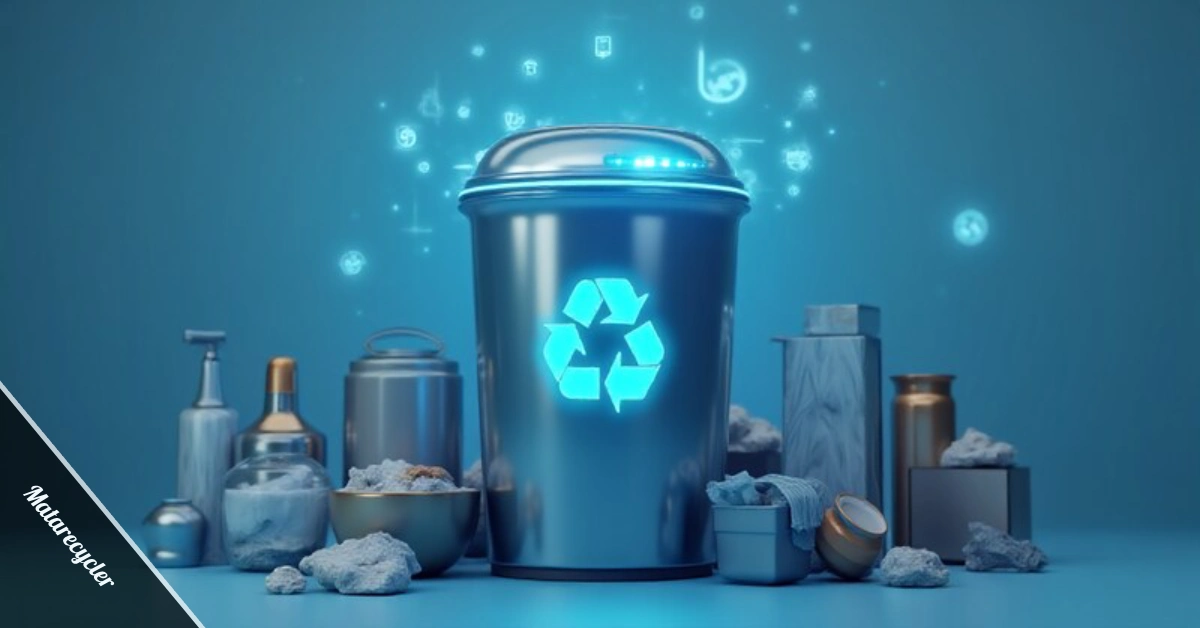
MataRecycler is an AI-powered smart recycling platform that automates waste sorting using computer vision and machine learning. It identifies recyclable materials in real time, reduces contamination rates, tracks environmental impact, and gamifies recycling with rewards. The system serves households, businesses, municipalities, and schools.
Most recycling programs fail at one critical point: contamination. A plastic bag in a paper load ruins an entire bale. A non-recyclable item mixed with metal creates equipment jams. One wrong piece cascades into lost value, extra labor, and wasted resources. MataRecycler addresses this problem head-on by placing artificial intelligence at the center of sorting, turning guesswork into precision.
The Problem: Why Traditional Recycling Fails
Traditional recycling operates on a broken model. Households sort items at home, but without clear guidance. Workers manually inspect streams of material. Contamination rates hover between 10 and 15 percent in developed nations. This contamination closes sorting facilities, halts operations, and sends perfectly good material to landfills instead of markets.
The cost is staggering. Municipalities spend millions on collection vehicles that follow fixed routes regardless of bin fill levels. Sorting facilities employ teams to remove contaminated items by hand. Businesses pay steep disposal fees even when their waste contains valuable materials. Meanwhile, users lack feedback about whether they sorted correctly, so mistakes repeat.
Public confusion deepens the problem. Most people don’t know which plastics are recyclable or how to prepare items. They over-sort, under-sort, or give up entirely. Participation drops in communities without clear education. The entire system becomes inefficient, expensive, and frustrating for everyone involved.
How MataRecycler Works
MataRecycler replaces guesswork with real-time intelligence. When a user places an item in a smart bin or scans it with a mobile app, the system uses computer vision to identify exactly what it is. The AI analyzes material type, color, composition, and condition within seconds.
The platform then provides immediate feedback. If the item is recyclable, it confirms the material category. If it shouldn’t be recycled, it alerts the user with guidance on proper disposal. This instant correction prevents contamination before it happens, not after.
On the operational side, cloud-based analytics track collection patterns across multiple bins or facilities. Machine learning algorithms identify when bins reach optimal fill levels rather than emptying them on a fixed schedule. Collection routes shift dynamically to reduce fuel consumption and labor time. Data flows into a dashboard where facility managers monitor their entire waste stream in real time.
For businesses and municipalities, integration is simple. MataRecycler connects to existing collection systems without requiring complete operational overhauls. The platform adapts to local recycling rules, material classifications, and waste streams. As it processes more items, its AI models improve, becoming more accurate with every scan.
Key Features That Drive Results
Smart bins sit at the center of the MataRecycler ecosystem. Each bin includes weight sensors, fill-level detectors, and cameras that capture images of deposited items. The system identifies contamination instantly and alerts facility managers before the bin is emptied.
The mobile app puts control in users’ hands. A barcode scanner lets people check if an item is recyclable before throwing it away. A searchable material database answers questions about everything from electronics to clothing. Gamified rewards—MataPoints, eco-badges, leaderboards—encourage consistent participation. Users see their environmental impact tracked: plastic saved, carbon prevented, resources recovered.
The AI engine improves continuously. Every scan trains the system on new material variations. Rare plastics, mixed composites, and regional differences become part of the model. Accuracy rises over time, and false positives (rejecting good recyclables) drop steadily.
Integration is seamless. MataRecycler works with municipal classification systems across regions. It supports multiple languages and local regulations. Whether you operate in Europe, Asia, or North America, the platform adapts to your rules and materials.
Real-World Impact by Sector
Manufacturing and logistics facilities face intense pressure to reduce waste costs and meet sustainability targets. One large manufacturing plant implemented MataRecycler’s sorting technology across its production facility. Recycling rates jumped 60 percent within six months. Contamination dropped sharply, allowing the facility to sell recovered aluminum and copper at market rates. Waste disposal fees fell 30 to 40 percent as fewer loads were rejected. The company achieved ROI in less than 18 months.
Municipal governments use MataRecycler to optimize city-wide collection systems. Smart bins deployed in public spaces measure fill levels in real time. Collection trucks respond to actual demand rather than following fixed routes, cutting fuel consumption significantly. Citizens see cleaner public spaces and fewer overflowing bins. Participation in recycling programs increased by 35 to 45 percent in cities where MataRecycler launched public awareness campaigns alongside the technology.
Educational institutions integrate MataRecycler into campus sustainability programs. Universities and schools use smart bins and mobile apps to engage students. Gamified rewards and real-time impact tracking transform recycling from an obligation into a behavioral habit. Campus waste reduction hit ambitious targets faster than expected. Students developed stronger environmental awareness through seeing immediate results of their choices.
How AI Reduces Contamination
Contamination happens because people make mistakes. They don’t know a yogurt container needs to be rinsed. They place a non-recyclable plastic in the bin. They mix materials that shouldn’t be combined. Traditional systems catch these errors only after collection and transport.
MataRecycler prevents the error instead. Computer vision identifies material type before the item enters the waste stream. Real-time feedback teaches users the correct decision. Over time, behavioral patterns shift as people learn what’s actually recyclable in their region.
The system learns from every mistake. When contamination does occur, facility managers flag the item in the dashboard. The AI analyzes why it was misidentified and adjusts its model. Historical data reveals which material types cause problems most often, and targeted education campaigns address those specific confusion points.
Automation amplifies the effect. Where facilities previously employed workers to hand-sort contaminated loads, AI handles the classification immediately. Labor requirements drop 40 to 50 percent. Workers shift to higher-value tasks. Overall facility throughput increases while error rates plummet.
Economic Benefits for Businesses
Waste disposal costs represent a significant line item for most organizations. Contaminated loads get rejected and sent to landfills, triggering disposal fees. Uncontaminated loads reach markets, but many businesses don’t know their true recovery value. MataRecycler makes both visible and actionable.
Lower disposal costs come first. Facilities that implement MataRecycler reduce rejected loads by up to 80 percent. Fewer contaminated batches mean predictable disposal costs. Some facilities eliminate landfill disposal for recyclable materials.
Recovered material value becomes a profit center. Aluminum, copper, and high-quality plastic streams command market prices. MataRecycler tracks material composition and volume, allowing facilities to negotiate better contracts with recyclers. Some companies generate revenue from waste streams that previously cost them money to dispose of.
Labor efficiency gains are substantial. Fewer contaminated loads reduce manual sorting requirements. Automated material identification requires no human intervention. Staff focus on logistics, equipment maintenance, and continuous improvement rather than repetitive sorting tasks.
ESG reporting becomes data-driven and verifiable. Companies can document exactly how many tons of material they diverted from landfills, how much carbon they prevented, and how much energy they saved through material recovery. This transparency supports sustainability commitments and appeals to investors and customers increasingly concerned with environmental responsibility.
Most facilities achieve full ROI within 12 to 18 months through a combination of cost reductions and recovered material value.
Environmental Impact Metrics
MataRecycler shifts the trajectory of waste streams dramatically. Industry-wide landfill diversion averages 35 percent. Facilities using MataRecycler achieve 70 percent or higher. The difference means millions of tons of material flow back into manufacturing instead of decomposing in landfills over decades.
Plastic contamination in recycled streams typically runs 10 to 15 percent. MataRecycler reduces it below 3 percent. Cleaner plastic bales command premium prices. More importantly, the plastic actually gets recycled into new products instead of being stockpiled or burned.
Carbon reduction follows. Fewer collection trips due to optimized routes directly cut fuel consumption. Cleaner material streams reduce reprocessing energy at recycling facilities. Most significantly, keeping material out of landfills prevents methane emissions from decomposition. A single ton of plastic kept out of a landfill prevents several tons of carbon equivalent over its lifetime.
Resource conservation compounds over time. Every aluminum can recovered saves 95 percent of the energy required to make one from virgin ore. Recovered copper returns to electronics and construction. Recovered paper pulp requires 70 percent less energy than virgin production. As contamination drops and recovery rates rise, the energy savings become substantial across entire regional waste systems.
Water savings are often overlooked but significant. Manufacturing aluminum from recycled material uses 90 percent less water than from bauxite ore. Metal recycling saves thousands of gallons per facility annually. Over a city’s entire recycling infrastructure, water conservation becomes measurable.
Getting Started with MataRecycler
Implementation begins with an assessment of your current waste streams. How much material flows through your facility? What types dominate your waste? What are your biggest contamination problems? What are the current disposal costs? Clear answers guide the deployment strategy.
Choose your deployment model next. Large facilities may invest in comprehensive smart bin networks. Smaller operations might start with mobile app adoption for user education. Many organizations use a hybrid approach, starting with high-contamination areas and expanding across their operations.
Integration with existing collection systems happens gradually. MataRecycler works alongside your current processes. It doesn’t require replacing trucks, hiring specialists, or shutting down operations during transition. The system connects to your dashboard within weeks.
Train staff and users simultaneously. Facility operators learn to read the dashboard and adjust routes based on real-time data. End users (employees, residents, or students) learn the app interface and scoring system. Clear communication about changes reduces resistance and accelerates adoption.
Monitor dashboard metrics throughout the first months. Contamination rates, collection efficiency, and participation trends show whether the implementation is working. Most organizations see measurable improvements within the first quarter, with full impact within six months.
Why MataRecycler Stands Out
Competing products offer bins or apps, but MataRecycler integrates the complete ecosystem. Smart hardware, mobile software, AI identification, cloud analytics, and behavioral incentives work as one system rather than separate components.
The AI model itself is proprietary and continuously improving. Trained on the analysis of over 100,000 material variations, it recognizes items that competitors’ systems struggle with. Regional material differences, uncommon plastics, and complex composites are handled accurately.
Scalability distinguishes MataRecycler from niche solutions. It works equally well for a single facility, a city district, or an entire metropolitan area. It adapts to different regulatory environments, waste classification systems, and operational models without custom development.
Global compatibility reflects real-world deployment across multiple continents. The system respects local recycling rules, material restrictions, and language preferences. A municipality in one country doesn’t start over when implementing in another.
The platform treats improvement as continuous rather than finished. As the AI encounters new materials and learns from facility data, it gets incrementally better. Your system becomes more effective over time without replacement cycles or major upgrades.
Conclusion
Recycling fails not because people don’t care but because systems make participation confusing and inefficient. MataRecycler removes the friction. AI identifies materials instantly. Real-time feedback teaches users correctly. Automated route optimization cuts collection costs. Clean material streams create genuine value. Gamified incentives turn compliance into a habit.
The result is a circular economy that actually works. Contamination drops below 3 percent. Landfill diversion hits 70 percent or higher. Disposal costs fall 30 to 40 percent. Organizations meet sustainability targets while cutting waste expenses. Communities clean up their environment while recovering valuable resources.
Whether you manage a manufacturing facility, a municipal system, a school campus, or a retail chain, MataRecycler delivers the same outcome: recycling becomes simpler, cleaner, and actually profitable. That’s not just innovation. That’s transformation.
