
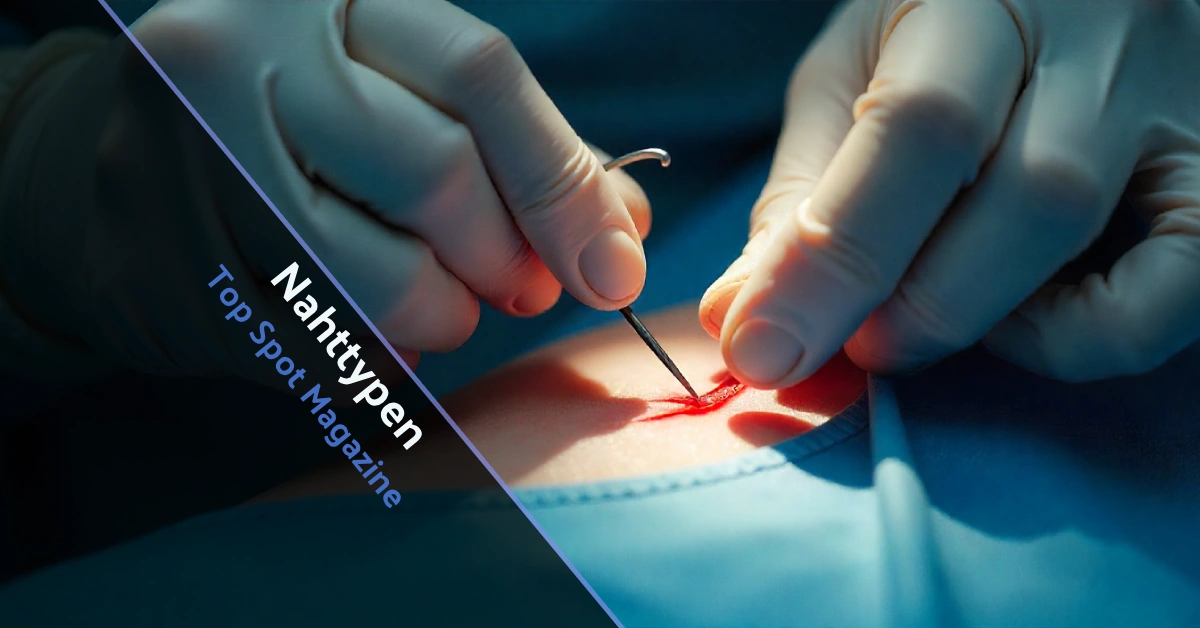
You’re about to cut into tissue. The patient’s outcome hinges on your technique. And the stitch you choose? That’s not just protocol—it’s the difference between clean healing and complications nobody wants.
Let’s strip away the textbook fluff. Nahttypen—German for “suture types”—are the backbone of surgical closure. Whether you’re a med student prepping for your first OR rotation or a surgical assistant refining your craft, understanding when to use which stitch isn’t optional. It’s survival.
This guide breaks down the stitches that matter, why they work, and when to deploy them. No jargon overload. No filler. Just the intel you need to make smart decisions under pressure.
What Are Nahttypen and Why Should You Care?
Nahttypen refers to the classification of surgical suture techniques used to close wounds, repair tissue, and support healing. Each stitch type serves a specific biomechanical purpose—distributing tension, minimizing scarring, or preventing dehiscence.
Here’s the truth: choosing the wrong stitch wastes time and risks patient safety. A running stitch might close faster, but it fails catastrophically if one loop breaks. Interrupted stitches take longer but offer redundancy. Understanding these trade-offs separates competent practitioners from those who just follow orders blindly.
Surgeons select nahttypen based on tissue type, wound location, tension requirements, and healing expectations. Skin closures demand different approaches than fascial repairs. Vascular anastomoses require precision interrupted stitches, while bowel closures might benefit from continuous techniques. Context drives every decision you make in the operating room.
The Core Categories: Interrupted vs. Continuous Stitches
All nahttypen fall into two camps: interrupted or continuous. This isn’t arbitrary—it’s about how force distributes across the wound.
Interrupted stitches are individual knots placed separately along the incision. Each stitch functions independently, creating multiple points of closure. If one fails, the others hold. This redundancy makes interrupted techniques safer for high-tension areas like abdominal fascia or contaminated wounds where infection risk runs high.
The downside? Time. Tying multiple knots slows you down. But that deliberate pace matters when precision trumps speed—think facial repairs where cosmetic outcomes affect patient satisfaction long after surgical pain fades.
Continuous stitches use a single thread running the entire wound length, secured at both ends. They’re faster and create a watertight seal—ideal for vascular work or bowel anastomoses where leakage means disaster. The catch: break one section, and the whole line fails. That’s why you avoid continuous techniques in contaminated fields or under extreme tension.
| Stitch Category | Advantages | Disadvantages | Best Use Cases |
|---|---|---|---|
| Interrupted | Redundancy, less tension per stitch, better for infected wounds | Time-consuming, more knots to tie | Fascial closure, contaminated wounds, high-tension repairs |
| Continuous | Fast, watertight seal, fewer knots | Single point of failure, distributes tension unevenly | Vascular anastomoses, bowel closure, subcuticular skin closure |
Simple Interrupted: Your Bread-and-Butter Technique
The simple interrupted stitch is what you’ll use most. Each suture enters perpendicular to the wound edge, passes through both sides, and ties off independently. This is your default for skin closure, muscle repair, and any situation where reliability matters more than speed.
Why it works: Even tension distribution prevents tissue strangulation. Each knot secures tissue without compressing adjacent areas. If infection develops or a stitch pulls through, the remaining closures maintain wound integrity while you address the problem.
Teaching moment: watch your needle angle. Enter at 90 degrees, exit equidistant from the wound edge. Sloppy technique creates uneven edges and puckered scars. Your attending will notice. So will the patient every time they look in the mirror.
Running (Continuous) Stitch: Speed When You Need It
The running stitch sacrifices redundancy for efficiency. After the initial anchor knot, your needle weaves back and forth along the wound without interruption until you reach the end and tie off. One thread, continuous tension, minimal time investment.
Surgeons favor this for subcuticular skin closures where cosmetic results matter. The suture runs beneath the dermis, pulling edges together without surface punctures. Result: minimal scarring and better aesthetic outcomes than staples or external interrupted stitches could deliver.
But here’s the risk: pull too tight, and you compromise blood flow. Too loose, and the wound gapes. Tension calibration separates novices from skilled practitioners. Practice on simulation models before you attempt this on real tissue under attending supervision.
Vertical Mattress: Maximum Eversion for Clean Edges
Vertical mattress stitches deliver superior wound edge eversion, preventing inversion that creates depressed scars. The technique involves two passes: a deep bite securing dermis and deeper tissue, followed by a superficial bite near the wound edge.
This double-pass approach distributes tension vertically rather than horizontally. Deep tissues are approximated without surface strangulation. The superficial pass everts skin edges, ensuring optimal healing conditions. Your result: flat, clean scars with minimal tension-related complications like dehiscence or necrosis.
Use a vertical mattress on high-tension areas—scalp, back, extremities. Avoid it on delicate facial tissue where the increased bulk creates visible marks. Every nahttypen choice involves trade-offs. Know your anatomy and healing priorities before you commit.
Horizontal Mattress: Tension Relief Without Compromise
When you need to reduce tension without sacrificing strength, the horizontal mattress delivers. Both needle passes run parallel to the wound, creating a rectangular pattern that distributes force across a wider tissue area than simple interrupted stitches achieve.
This technique shines in friable tissue—elderly patients with thin skin, steroid-treated wounds, or areas with poor vascularity. The broad tension distribution prevents tearing through weakened tissue. You’re basically creating a reinforced closure that accommodates imperfect conditions without failing spectacularly.
Placement matters: space horizontal mattress stitches farther apart than simple interrupted. The wider distribution already provides coverage. Overtightening causes tissue necrosis. Leave enough slack for post-op swelling. Your goal is approximation, not strangulation.
Subcuticular Stitch: The Cosmetic Champion
Subcuticular stitches run entirely beneath the skin surface, eliminating external puncture marks. This continuous intradermal technique pulls wound edges together from below, creating tension without visible suture tracks. When cosmetic outcomes drive decisions—facial repairs, visible extremities—this is your move.
Proper execution requires precision. Your needle tracks horizontally through the dermis, catching equal tissue bites on alternating sides. The pattern resembles a ladder lying flat beneath the skin. Exit at wound ends without breaking the surface except at anchor points.
Patients love subcuticular closures. No stitch removal appointments. Minimal scarring. But it demands higher skill and isn’t suitable for high-tension wounds. Reserve this for low-tension closures where aesthetics matter, and healing conditions favor primary intention without complications.
Purse-String: Specialized Closure for Circular Defects
Purse-string sutures close circular wounds or stomas using a continuous stitch around the perimeter. Pull the ends, and the opening cinches shut like a drawstring bag. This specialized nahttypen handles appendiceal stumps, bowel exteriorization sites, and circular skin defects where traditional linear closure fails.
The technique requires careful planning. Your stitch must capture adequate tissue depth without compromising blood supply. Too shallow, and it tears through. Too deep, and you risk underlying structure damage. The learning curve is steep, but mastery opens options for complex closures that other techniques can’t address.
Choosing Your Nahttypen: A Decision Framework
Selection criteria cascade from wound assessment through healing expectations. Start with location—facial repairs demand different approaches than abdominal closures. Assess tension—high-stress areas need interrupted redundancy. Consider contamination—infected wounds require techniques that accommodate drainage and prevent abscess formation.
Tissue characteristics matter. Friable tissue needs horizontal mattress or widely spaced interrupted stitches. Healthy, robust tissue tolerates continuous techniques. Vascular areas benefit from precise interrupted placement. Bowel anastomoses require watertight continuous closures. Your assessment drives technique, not habit or convenience.
Patient factors influence outcomes. Diabetics heal slowly; use interrupted stitches for redundancy. Immunocompromised patients need techniques that minimize infection risk. Elderly patients with thin skin require gentle, broad tension distribution. Pediatric patients demand absorbable sutures that don’t require traumatic removal. Context shapes every decision.
Common Mistakes That Sabotage Healing
Overtightening ranks as the most frequent error. Tight stitches strangle tissue, causing necrosis and dehiscence. Your goal is approximation—bringing edges together without compression. Leave room for post-op swelling. Tissue that turns white or blanches under your suture is already compromised.
Uneven spacing creates weak points where tension concentrates. Maintain consistent distances between stitches. Irregular patterns invite dehiscence at gaps and tissue death at tight clusters. Measure twice, place once. Precision prevents complications that extend recovery and compromise outcomes.
Wrong nahttypen selection wastes time and risks failure. Don’t default to familiar techniques when unfamiliar situations demand different approaches. Continuous stitches in contaminated wounds invite disaster. Simple interrupted on scalp lacerations leads to gaping. Match technique to conditions, not comfort.
Practice Makes Proficient: Building Your Skill Set
Simulation labs offer risk-free repetition. Practice basic interrupted until your spacing becomes automatic. Progress to continuous techniques, focusing on tension consistency. Add complexity with vertical mattress, horizontal mattress, and subcuticular closures. Master fundamentals before attempting specialized techniques like purse-string.
Observe experienced surgeons. Watch their hand positioning, needle angles, and knot-tying efficiency. Notice how they adjust technique based on tissue response. Ask questions about decision-making rationale. The best learning happens when you understand not just how, but why.
Seek feedback early and often. Your attending can correct bad habits before they calcify. Accept criticism as improvement fuel, not a personal attack. Every surgeon once struggled with technique. The difference between good and great is the willingness to learn from mistakes instead of defending them.
Your Nahttypen Playbook: Final Thoughts
Surgical suturing isn’t art—it’s applied biomechanics with clinical consequences. Choose nahttypen based on wound characteristics, tissue quality, tension requirements, and healing expectations. Practice until the technique becomes automatic. Learn from every closure, successful or complicated.
The stitches you place today determine outcomes patients live with permanently. That responsibility deserves your full attention and continuous improvement. Master the fundamentals. Understand the trade-offs. Make decisions based on evidence and experience, not habit or hope.
