
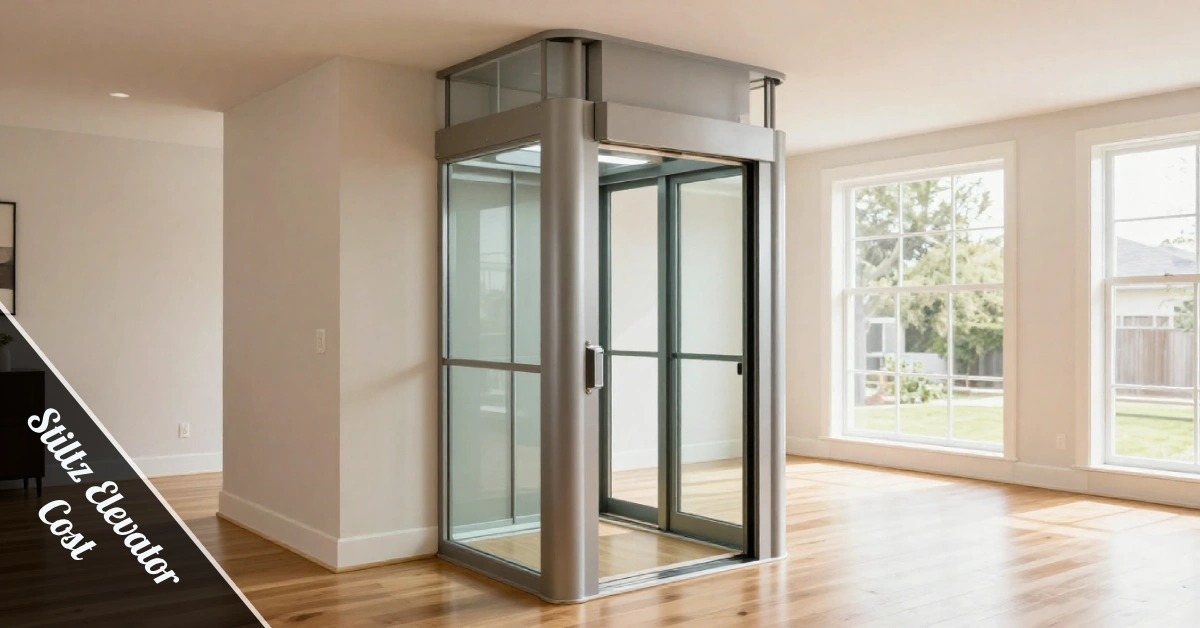
A Stiltz home lift is one of the cleanest accessibility upgrades you can make. No massive shaft construction. No tearing your home apart. Just a through-the-floor lift that fits neatly into your space and gets you where you need to go.
But let’s be real — the first thing everyone wants to know is the price. Fair enough. Understanding Stiltz elevator cost upfront saves you from sticker shock later and helps you budget like a pro.
According to Dwellify Home, a fully installed Stiltz elevator typically costs between $25,000 and $45,000, depending on your model and how much your home needs to be prepped.
What’s the Actual Stiltz Elevator Cost?
Here’s the quick answer you came for: plan for $25,000 to $45,000 fully installed.
That range exists because two homes can buy the same lift and still see very different final numbers. The elevator unit matters, sure. But what really moves the needle is what your home needs done before that lift goes in.
Think floor openings, joist adjustments, electrical circuits, finishing work, and local permits. These aren’t surprises — they’re just part of the real picture that most promo pages skip over.
The Stiltz elevator cost breakdown below gives you a real-world view of where each dollar goes, so you’re not comparing apples to mystery fruit when quotes come in.
Stiltz Elevator Cost Breakdown
| Cost Component | Typical Range | What It Covers |
| Elevator unit + standard install | $25,000 – $30,000 | Lift system, setup, testing |
| Duo vs Trio model upgrade | +$5,000 – $10,000 | Larger size, wheelchair access |
| Site prep & construction | $3,000 – $10,000+ | Floor opening, framing, finishing |
| Electrical work | $500 – $2,000 | Dedicated circuit, wiring |
| Permits & inspections | $500 – $2,500 | Local code compliance |
| Estimated total installed | $25,000 – $45,000+ | Complete, move-in ready system |
Duo vs Trio: Which Model Fits Your Budget?
The Duo — Best Bang for Most Homes
The Duo is the go-to for most homeowners. It handles one or two passengers standing, works well for aging-in-place setups, and fits into tighter spaces without major structural drama.
It typically sits at the lower end of the price range. A smaller footprint means less floor opening, less framing, and fewer surprises during installation.
If wheelchair access isn’t on your checklist, the Duo is honestly the smart play. You get solid function, clean design, and the best cost-to-value ratio in the Stiltz lineup.
The Trio — Worth It If You Need Wheelchair Access
The Trio runs wider and handles wheelchairs or three standing passengers. That extra width does push costs up a bit, not because the lift itself is dramatically pricier, but because a bigger platform means more work around it.
Expect a larger floor opening, more framing, and sometimes layout tweaks to get the clearance right. If accessibility is a non-negotiable priority, the Trio earns every extra dollar. If it’s not, think carefully before upgrading.
Site Prep Is Where Budgets Really Swing
This is the part most articles gloss over, and it’s where homeowners get caught off guard.
Every Stiltz install needs a clean through-floor opening between levels. That means cutting flooring, adjusting joists if needed, then finishing everything so it looks intentional — not patched together on a weekend.
Common prep work includes creating the floor opening, reinforcing structural elements, drywall, trim, paint, and matching your existing finishes. In many projects, this single line item ends up being the biggest cost variable in the whole job.
Location inside your home matters too. Obstacles like ductwork, plumbing, or load-bearing walls can add scope fast. This cost guide breaks it down clearly so you can flag these issues before they become change orders.
Electrical Work, Permits, and the Extras That Add Up
Stiltz lifts need a dedicated electrical circuit — nothing complicated, but it does require a licensed electrician. Budget $500 to $2,000, depending on your panel setup and how far the circuit runs.
Permits and inspections are required in most areas. Who pulls them and how well they’re coordinated affects both your timeline and your final bill. Always ask upfront who handles permitting — a good installer won’t dodge that question.
These line items are easy to overlook when you’re focused on the big number, but they’re real costs that belong in your budget from day one.
Planning a Three-Floor Install? Here’s What Changes
A three-stop setup is absolutely doable with Stiltz. But it’s not just a simple add-on — more stops means more openings, more finishing work, and tighter coordination across levels.
The lift unit itself doesn’t triple in price. The added cost comes from the extra prep and detailing required to make everything look clean and safe on every floor. Factor that in early so your budget reflects reality.
Used Stiltz Elevator for Sale — Smart or Risky?
The price tag on a used unit looks tempting. But reinstall costs are real and often underestimated.
You still need site prep, inspections, and possibly replacement parts — none of which are covered by a transferred warranty (if one even exists). Verify service history and parts availability before you commit, or the savings can evaporate faster than you’d think.
In most cases, the peace of mind from a new installation with full warranty support outweighs the upfront discount of going used.
Long-Term Ownership Costs — Cheaper Than You’d Expect
Once it’s in, a Stiltz elevator is surprisingly affordable to own. Power consumption is modest — similar to a standard household appliance — so your monthly electric bill won’t take a hit.
Maintenance is predictable. Periodic servicing and safety checks keep things running smoothly, and most long-term issues involve minor wear items, not major mechanical failures. A clear service plan and a solid understanding of your warranty go a long way toward stress-free ownership.
Is Stiltz Elevator Cost Worth It? The Real ROI
For aging-in-place homeowners, the answer is almost always yes. A Stiltz lift keeps you in the home you love, on every level, without the daily negotiation with stairs.
For property investors and families planning, it adds a tangible accessibility feature that appeals to a growing buyer demographic. It’s not a luxury flex — it’s a practical investment in comfort, safety, and long-term independence.
The full picture of Stiltz elevator cost — when you factor in reduced construction compared to traditional shafted systems, lower ongoing energy use, and the value of staying in your home — makes a compelling case. Read the complete breakdown here before you request your first quote.
Quick FAQs
What’s the average Stiltz elevator cost installed?
Most homeowners pay between $25,000 and $45,000 fully installed, with the final number depending on model choice and how much prep your home requires.
Duo or Trio — which should I choose?
Choose the Duo if you don’t need wheelchair access. It’s the most cost-effective option for daily use and aging-in-place scenarios. Go Trio if wheelchair accessibility is a must-have.
Can a Stiltz elevator go to three floors?
Yes. A three-floor setup is possible, but costs more due to extra openings and finishing work across each level.
Is a used Stiltz elevator a good deal?
Potentially, but account for full reinstall costs and verify warranty transferability. The savings often shrink once you price out all the work needed to get it running in a new home.
Bottom Line
Stiltz elevator cost isn’t one number — it’s a picture made up of your model choice, your home’s specific needs, local labor rates, and how well the project gets planned upfront.
When you know what drives the price, you can budget with confidence, compare quotes intelligently, and avoid the surprises that catch most homeowners off guard.
The right lift, in the right location, with the right installer — that’s the cheat code. And now you know exactly what to look for.
