

Who is Mark Rober: NASA Engineer Turned YouTube Star
Mark Rober is an American engineer, inventor, and YouTuber with 72.6 million subscribers. He spent nine years at NASA working on the Curiosity rover, then joined Apple before becoming one of...

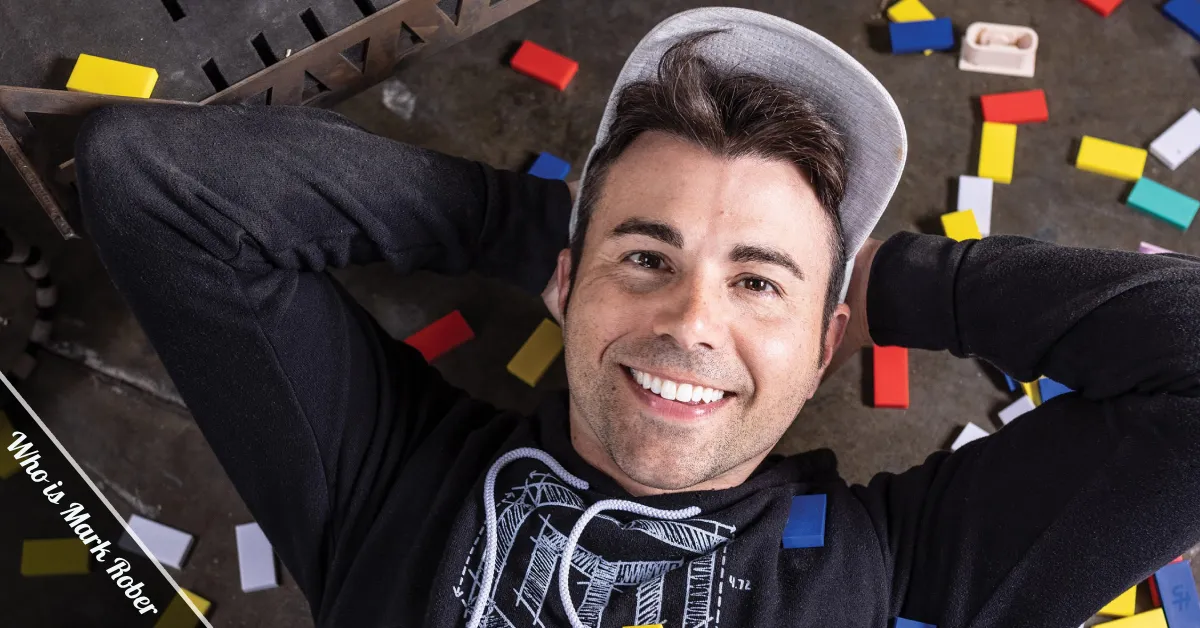
Mark Rober is an American engineer, inventor, and YouTuber with 72.6 million subscribers. He spent nine years at NASA working on the Curiosity rover, then joined Apple before becoming one of YouTube’s most influential science educators through his viral experiments and educational content.
Table Of Content
- Early Life and Engineering Passion
- NASA Career and Curiosity Rover Work
- Key Projects and Achievements
- Transition to Apple and Tech Innovation
- YouTube Success and Viral Videos
- Glitter Bomb Series and Most Popular Content
- Building a Business Empire
- CrunchLabs and STEM Education Mission
- Philanthropy and Global Impact
- Current Status and Future Projects
- Net Worth and Revenue Streams
- Personal Life and Advocacy Work
What happens when a NASA engineer who helped land a rover on Mars decides to make science fun for everyone? You get Mark Rober, a mechanical engineer whose journey from designing spacecraft to creating viral YouTube videos has made him one of the internet’s most beloved science educators. With over 72 million subscribers and 15 billion views, Rober has turned complex engineering into entertainment that captivates millions.
Early Life and Engineering Passion
Mark Braxton Rober was born on March 11, 1980, in Orange County, California. He grew up as the youngest of three siblings in Brea, where his curiosity about how things work showed up early.
As a kid, Rober wasn’t just taking things apart. He was solving problems. One of his first inventions was a pair of goggles designed to prevent tears while cutting onions. This childhood project foreshadowed a career built on creative problem-solving.
After graduating from Brea Olinda High School in 1998, Rober pursued his passion formally. He earned a Bachelor of Science in mechanical engineering from Brigham Young University in 2004. He later completed a Master’s degree in mechanical engineering at the University of Southern California, building the technical foundation that would define his career.
NASA Career and Curiosity Rover Work
In 2004, fresh out of BYU, Rober joined NASA’s Jet Propulsion Laboratory. This wasn’t just any job. JPL is where NASA designs and operates robotic spacecraft that explore our solar system and beyond.
Rober spent nine years at JPL, seven of which focused on one of NASA’s most ambitious projects: the Mars Curiosity rover. This car-sized robot, launched in 2011, landed on Mars in 2012 and continues to explore the red planet today.
Key Projects and Achievements
Beyond Curiosity, Rober contributed to several JPL missions. He designed and delivered hardware for the Mars Science Laboratory, Gravity Recovery and Interior Laboratory (GRAIL), and Soil Moisture Active Passive (SMAP) missions.
His work extended beyond hardware. Rober was a primary architect of “JPL Wired,” a comprehensive knowledge-capture wiki system. He even published a case study on using wiki technology in high-tech organizations, showing his interest in not just building things but improving how teams work together.
While at NASA, earning between $120,000 and $150,000 annually, Rober started experimenting with something different: making videos about science.
Transition to Apple and Tech Innovation
In 2015, Rober left NASA for Silicon Valley. He joined Apple as a product designer in the Special Projects Group, where he worked on entertainment systems for self-driving cars.
During his four years at Apple, Rober authored multiple patents related to virtual reality technology in autonomous vehicles. This experience showed his ability to move from space exploration to consumer technology seamlessly.
But his real passion project was growing on the side.
YouTube Success and Viral Videos
In October 2011, while still at NASA, Rober posted his first YouTube video. He’d created a Halloween costume using two iPads that made it look like you could see through his torso, creating a “gaping hole” illusion.
The video went viral overnight, racking up 1.5 million views in a single day. This wasn’t just a fun trick. It was proof that Rober could make technical concepts accessible and entertaining.
Glitter Bomb Series and Most Popular Content
Rober’s most famous creation is his Glitter Bomb series. Starting in December 2018, he engineered elaborate packages to catch package thieves. These devices sprayed glitter, released foul odors, and recorded video of the thieves’ reactions.
The original Glitter Bomb video has been viewed hundreds of millions of times. He’s released multiple versions, each more sophisticated than the last, turning package theft into a compelling engineering challenge.
His content covers everything from building the world’s largest elephant toothpaste explosion to testing superhero gadgets with real science. Videos average 20 minutes, published monthly, with each designed to teach engineering principles through entertainment.
According to his Wikipedia page, his channel ranks in the top 100 most-watched on YouTube. As of February 2026, he has 72.6 million subscribers and over 15 billion total views.
Building a Business Empire
The viral Halloween costume wasn’t just a video. In 2012, Rober launched Digital Dudz, a company selling app-integrated costumes based on his original concept. He held the patent for the technology.
The business exploded. Digital Dudz generated $250,000 in revenue in its first three weeks. By 2013, the costumes were sold in major retail stores like Party City and featured on CBS News, CNN, The Tonight Show with Jay Leno, and The Today Show.
Rober sold Digital Dudz to UK-based Morphsuits in 2013, proving he could turn a viral video into a profitable business.
CrunchLabs and STEM Education Mission
In 2022, Rober launched CrunchLabs, his most ambitious business venture. The company delivers monthly subscription boxes called CrunchLabs Build Boxes for kids and Hack Packs for teens and adults.
Each box contains hands-on engineering projects designed to teach STEM concepts through building. The subscription model generates recurring revenue while fulfilling Rober’s mission to reach one billion young minds with science education.
CrunchLabs represents a significant portion of Rober’s current income, complementing his YouTube revenue and sponsorships. You can follow his journey on his Instagram account, where he shares behind-the-scenes content with 8 million followers.
Philanthropy and Global Impact
Rober’s influence extends beyond entertainment and education. He’s partnered with fellow YouTuber MrBeast (Jimmy Donaldson) on three massive fundraising campaigns.
In October 2019, they launched Team Trees to raise $20 million for the Arbor Day Foundation to plant 20 million trees. They succeeded by the end of 2019.
Two years later, in October 2021, they created Team Seas, raising over $34 million to remove trash from oceans and rivers. The campaign partnered with The Ocean Cleanup and Ocean Conservancy.
In August 2025, they launched Team Water to raise $40 million for WaterAid. By August 2025, the campaign had already exceeded its goal, promising to provide clean water to 2 million people.
These campaigns demonstrate Rober’s ability to mobilize his audience for real-world impact, combining entertainment with meaningful change.
Current Status and Future Projects
Rober continues uploading monthly videos to his main channel while expanding into new media. In 2025, Netflix announced two projects with him.
The first is a “greatest hits” compilation of his most famous experiments, released in late 2025. The second is an original competition series scheduled for 2026, produced by CrunchLabs and Kimmelot (Jimmy Kimmel’s production company).
He also delivered the 2023 commencement address at MIT, received the Institution of Engineering and Technology’s STEM Personality of the Year award in 2021, and was named an Honorary Fellow by the IET.
Rober hosts the podcast “All Grown Up” and maintains an active presence on TikTok (13.1 million followers) and Instagram (8 million followers).
Net Worth and Revenue Streams
As of 2025, Mark Rober’s net worth is estimated between $23 million and $25 million according to multiple sources, including Celebrity Net Worth and Forbes.
His income comes from several sources. YouTube ad revenue alone generates an estimated $100,000 to $136,000 monthly, or roughly $1.2 million to $1.6 million annually. Sponsored content, CrunchLabs subscriptions, speaking engagements, and merchandise add significantly to this total.
His monthly YouTube earnings in December 2025 ranged from $99,624 to $136,485. Over his entire YouTube career spanning more than a decade, his estimated total earnings from views alone exceed $10 million.
Personal Life and Advocacy Work
Rober moved to Sunnyvale, California, in 2015. He was previously married but divorced in 2021. He has a son who is on the autism spectrum, which has made Rober a vocal advocate for autism awareness.
In April 2021, Rober and Jimmy Kimmel hosted a live stream that raised $3 million for NEXT for AUTISM. His advocacy work represents a personal commitment that extends his influence beyond entertainment and education.
He’s created a career that proves engineering doesn’t have to be boring. By turning complex science into viral entertainment, building multiple successful businesses, and using his platform to raise millions for charitable causes, Rober has redefined what it means to be a science educator in the digital age. His mission to inspire one billion young people with science continues to grow with each video, subscription box, and philanthropic campaign.






No Comment! Be the first one.